I wish the ape a lot of success.
Stereo Sisterhood / Blog Graveyard:
- After The Sabbath (R.I.P?) ; All Ages ; Another Nickel (R.I.P.) ; Bachelor ; BangtheBore ; Beard (R.I.P.) ; Beyond The Implode (R.I.P.) ; Black Editions ; Black Time ; Blue Moment ; Bull ; Cocaine & Rhinestones ; Dancing ; DCB (R.I.P.) ; Did Not Chart ; Diskant (R.I.P.) ; DIYSFL ; Dreaming (R.I.P.?) ; Dusted in Exile ; Echoes & Dust ; Every GBV LP ; Flux ; Free ; Freq ; F-in' Record Reviews ; Garage Hangover ; Gramophone ; Grant ; Head Heritage ; Heathen Disco/Doug Mosurock ; Jonathan ; KBD ; Kulkarni ; Landline/Jay Babcock ; Lexicon Devil ; Lost Prom (R.I.P.?) ; LPCoverLover ; Midnight Mines ; Musique Machine ; Mutant Sounds (R.I.P.?) ; Nick Thunk :( ; Norman ; Peel ; Perfect Sound Forever ; Quietus ; Science ; Teleport City ; Terminal Escape ; Terrascope ; Tome ; Transistors ; Ubu ; Upset ; Vibes ; WFMU (R.I.P.) ; XRRF (occasionally resurrected). [If you know of any good rock-write still online, pls let me know.]
Other Place. // One Band. // Another Band. // Spooky Sounds. // MIXES. // Thanks for reading.
Wednesday, April 06, 2016

For a brief window at the drag-end of the 1960s and the trudge into the early ‘70s, the now-accepted narrative of rock n’ roll (and subsequently, Rock Music) as a tale of black musical forms repurposed by white musicians could, if viewed from the right angle, have seemed a lot less certain than it does to us today.
Admittedly, the ‘colonial’ aspect of rock n’ roll (a project whose trajectory must still have seemed almost accidental to its largely well-meaning participants, I hasten to add) was already well established by 196X. By most accounts, it was initiated the moment Elvis made the scene, and of course it gained a significant boost in the early/mid ‘60s through the ascendency of British r’n’b, culminating in the black-face pantomime of vocalists like Mick Jagger and Rod Stewart, and the exaggerated buffoonery of the Clapton/Beck school of blues-busting lead guitar worship.
(As an aside, is it merely coincidental do you think that these traditions developed at the same time that the retrospectively mortifying Black & White Minstrel Show continued to be rapturously received by British TV & theatre audiences? Whilst the rock musicians may appear more sympathetic to us in their earnest reverence for “the real thing”, wasn’t the culture that both legitimised and celebrated their desire to recreate it as parody, often at the direct expense of contemporary black music [see for instance the oft-overlooked aggro between hippies and reggae-affiliated skinheads in late ‘60s London], essentially the same?)
So far, so familiar. But, if we go back to ’68-’70, my contention is that the finality of this black-to-white trajectory was not yet set in stone. And the lightning bolt that came to put a big fucking crack in that stone (if you will) was of course Jimi Hendrix.
In terms of the racial dynamic within rock n’ roll at the time, Hendrix very much represented an ‘alchemical marriage’ – a too-good-to-be-true messianic figure, here to right all wrongs, unite the tribes and take everyone to the next level. With his naively sincere appreciation of Dylan, The Beatles and even Clapton, he offered an olive branch to the honky, whilst the quote-unquote “authentic” grit and fury of the blues that was perceived as his birthright continued to boil beneath every note he played.
With THESIS and ANTITHESIS of the ol’ Leninist dialectic thus duly covered furthermore, the golden boy actually proceeded to go the distance and give us SYNTHESIS. Taking on board the one true innovation fostered by the British guitar cult – the utilisation of excessive volume, feedback and pure noise – he immediately pushed it further, and explored it more creatively and excitingly, than any of his fussier, more technique-fixated contemporaries, establishing a new benchmark for all future rock guitar, wherein a level of distortion that had previously only been hinted at by the most unhinged and eccentric of his predecessors subsequently became the norm. (It is here, needless to say, that the obsessive pursuit of pre-amp processing and tonal ‘effects’ that now consumes approximately 98% of the time and budget of the average white ‘indie’ guitarist has its origins.)

Whilst Jimi Hendrix was thus the natural spearhead for a black reclamation of rock n’ roll culture in the late 1960s, he was far from the only figure pushing in this direction,
Figures as titanic as James Brown, Sly Stone and Aretha Franklin were all busy mixing draughts of heavier, angrier, more ‘rock’ influenced sound into their music, that, along with Norman Whitfield’s bold productions for The Temptations and Edwin Starr at Motown, created a nameless, sprawling mass of vast potency that pushed far beyond the commercially defined parameters of ‘soul’, but was not yet fenced off by the exclusionary shelving tag of ‘funk’. (In the music industry as in ceremonial magic, to name something is to control and confine it.)
At the same time, even the re-emergence of originators such as Muddy Waters, Howlin’ Wolf, Bo Diddley and John Lee Hooker – returning like absent kings to collect the keys to their kingdom from the denizens of psychedelic ballrooms – must have spawned hope and expectation. (After all, look at the transformative rumpus those guys casually kicked up back in the ‘40s and ‘50s. Who in 1969 was to say they couldn’t do it again, and reap appropriate financial rewards into the bargain?)
For the hopeful onlooker, particularly in the vexed climate of the post-MLK USA, the prospect of black America finally regaining the driving seat of Western popular music must have seemed intoxicating.
One such onlooker, peering enviously through the fronds from a camp too fusty and marginal to yet join this optimistic bacchanal, was the ascetic, warlock-like figure of Miles Davis.
On one level, Davis’s blatant attempts to mimic Hendrix, both before and after the latter’s death, could appear rather pathetic to the casual observer. Replacing his earlier wardrobe of impeccably tailored suits with outlandishly garish ‘psychedelic’ attire and feeding his trumpet through a wah-wah pedal, the increasingly emaciated older man could easily have become a laughing stock – were it not for the fact that the music he created as a result of his infatuation with Hendrix and the other ambitious black mega-stars remains so indelibly powerful that to belittle its creator in any way whatsoever would be an act of shameful cultural ignorance.

On first spin, ‘Bitches Brew’ (Davis’s chief statement of intent vis-à-vis the new music that the post-Hendrix era emboldened him to instigate) is not a platter that’s going to blow the mind of many rock fans straight out of the gate. Indeed, in spite of the voluminous litanies of critical praise that the album has attracted over the years, helping to smuggle it into our homes and ears, cloaked by its proximity the rest of the canonical major label ‘classics’, it is a record that functions more like a slow release gas canister or a buried piece of hypnotic suggestion, lurking quietly on CD shelves and in mp3 libraries, waiting patiently for an opportunity to immerse the unsuspecting listener in its ungraspable aural sorcery.
Rich in congas, electric pianos and other recognised signifiers of lameness, it is also, in keeping with Davis’s work as a whole, entirely lacking in the kind of fire-breathing, truth-blurting sax epiphanies that us ruffian rock fans typically gravitate towards when dipping our toes in the jazz canon. An arch piece of contrarianism, ‘Bitches Brew’ presents the novice listener with what initially seems to be several massive, patience-testing chunks of featureless, texturally unfashionable nothingness.
Pointedly lacking in both the technical pyrotechnics of bop and the pungent badassery of black rock and funk, it is liable to slip ever further down the ‘to listen’ pile, ready to emerge again, perhaps years later, to test what we have learned in the interim.
What the listener will need to have learned, of course, is that, to some people (many of whom drive bulldozers), a rainforest looks like nothingness. As inscrutable as it may initially seem, once you have let the texture of ‘Bitches Brew’ sink into your consciousness, it opens up to reveal what must surely be one of the richest sound-worlds ever captured via the conventional recording of traditional instruments.
How many of us dopes have, at some point in our lives, whacked the side of our skulls and proclaimed, “by heavens, this is an AMBIENT album!”, letting the fact that it was laid down and filed so very far away from the time and place in which are teachers tell us Brian Eno and some German guys invented that concept slowly sink in.
Buzzing, hissing, swishing, dripping, hooting and shaking, driven on by a monster groove whose pulse seems to owe more to the breeze and the tides than to Max Roach or the JBs, the instruments wrangled by Miles and his collaborators on ‘Bitches Brew’ form a kind of self-contained eco-system that reminds me of nothing so much as the fantastical jungle paintings of Henri Rousseau.
And if all this sounds a bit hippie-ish, well, as per Eno’s later formalisation of the concept, an ‘ambient’ record can effectively act as a cloak – a kind of signal-jamming encryption beneath which more challenging ideas can be introduced and exchanged. In the case of ‘Bitches Brew’, the rainforest may represent a kind of stasis, but if so, it is a stasis built on perpetual motion, full of sudden movement, cacophonous upset and, for the incautious tourist, danger.
Once you get deeper into it in fact, the barely suppressed violence beneath the placid exterior of ‘Bitches Brew’ becomes impossible to ignore. Like hunting animals, the lead instruments skitter around, leap and retreat, ever wary, avoiding confrontation. The playing of all the musicians is wired and permanently on edge, recognizing that, under the watchful eye of Miles, their conduct must at all times be exemplary, but also painfully aware that they’ll bring down an unwanted showdown the moment they dare poke their heads above the undergrowth.
Creating a sense of simmering, unrelieved tension that passes undiminished through weird passages of shimmering tonal beauty, the overall effect of this atmosphere is utterly enervating, and remains unique in my experience as a listener.
Extending this inherently questionable rainforest metaphor further, it is difficult not to envision Miles himself as the good ol’ King of the Jungle figure - the big cat stalking his prey, the.. hey, why not go all the way with this shit and just call him a PANTHER, shall we?
Through the preceding decades of his jazz career, Miles had been fostering an atmosphere wherein, when he plays a note, people shut up and listen – and by the time of ‘..Brew’, he had it down to perfection. For his fans at the time, his actual playing on the record wouldn’t have constituted anything revelatory - his lines are as minimal, as painstakingly considered and as wracked by loss and frustration as his pre-existing legend demands. What’s new here is rather the experience of hearing how they hold their own against this strange, new electrified background, cutting through the undergrowth like a stalking predator, lethargic but deadly, pushing the twittering chaos that surrounds him deep into the background.

Although Miles Davis frequently claimed to operate a colour-blind recruitment policy when selecting his band members, the feverish obsession with race that increasingly seemed to consume him as he got older belies this, and one name that of course sticks out like a sore thumb on the sleeve of ‘Bitches Brew’ is that of John McLaughlin on electric guitar.
Assuming he ever deemed to speak about it at all, Davis’s decision-making process in selecting McLaughlin remains blurry. I don’t have the relevant biographies and what-not to hand, but the question immediately springs to mind is: wouldn’t he have rather got Hendrix? Did he try? Was Hendrix unavailable, or uninterested? Or, more interestingly for your purposes here, did Miles actually want to avoid being drawn into some kind of epic ego battle that could have worked against their overall musical/racial cause of both musicians? [Of course, McLaughlin had already played on ‘In a Silent Way’ a year earlier, so Miles probably already had him on the payroll, if you want a spoil-sport Occam’s Razor explanation. – Ed.]
Anyway, we got McLaughlin, and his inclusion on ‘Bitches Brew’ proved a stroke of genius the like of which even Miles himself could probably never have anticipated. A nimble-fingered scion of the same British blues lineage that gave us Clapton et al (and who would soon of course go on to take virtuosic bombast to head-spinning new extremes in Mahavishnu Orchestra), one can easily imagine McLaughlin being set up as a ‘rube’ by Miles on ‘Bitches Brew’ – a target to be taken down.
He might well have been expected to enter the tense, electrically charged forest atmosphere of the album like a blundering great white hunter, his bright, bold playing tootling away a mile a minute, saying nothing much beyond “look – rock guitar on a jazz record!”, just waiting for Miles to put horn to lips and deliver the smackdown – a single, sonorous note that would have Big John, like everyone else, quaking in his boots as the Panther treads softly through the grass.
Thankfully for us all though, and to McLaughlin’s eternal credit, that’s not the way things panned out at all. Clearly hip to the heads-down wariness of his band-mates, he slips into the fabric of ‘Pharaoh’s Dance’ as subtly as a ninja, adding a gauze-thin layer of woody, textural fret-scrabbling that demands no retaliation. Growing in confidence as the album progresses, it’s only on the second disc that he really breaks out, by which point he has learned to expertly mimic his potential aggressor, adding piercing shards of hi-end overdrive into furtive solos that feel as incisive and knottily cerebral as those of his band leader.
Surprised and, one hopes, impressed by his guitarist’s gumption (he even named a song after him for god’s sake – not the sorted of thing Miles “everyone’s a motherfucker cept me” Davis did just for laffs), Miles responds to McLaughlin in a spirit of dialogue rather than rank-pulling aggression, and the pair’s spark-spitting interplay across the red skies of ‘Spanish Key’ and ‘Miles Runs The Voodoo Down’ - more an impassioned summit on revolutionary street-battle tactics than a mere “frank exchange of blues” - is the final rocket that puts ‘Bitches Brew’ up amongst the gods – an untouchable achievement whose poker-faced refusal to yield to conventional criticism makes it forever fresh as it searches out new ears.
Miles and McLaughlin would of course go on further build their musical relationship through the louder, ballsier and even more magnificently rock-damaged triumvirate of ‘Jack Johnson’, ‘Live Evil’ and ‘On The Corner’ over the next few years, but it is ‘..Brew’ that provides the pivotal moment – a form of “fusion” whose boundaries extend far beyond the mere mash-up of rock and jazz tropes that later came to define that genre, and a far more important step forward from Hendrix’s initial alchemical synthesis than would likely have been achieved had Miles instead just rocked up at Jimi’s place to record an hour of fuzz-blasting power jams.

The triumph of ‘Bitches Brew’ and its follow-ups provide just one pertinent example of the wider growth of utopian, inter-racial ‘fusion’ music that briefly flourished between about 1968 and 1971. Watch just about any concert film or music doc from this era and you will find some evidence of the new breed of racially mixed big band jam units who were doing the rounds post-Woodstock, both inspired by, and no doubt providing inspiration to, Miles’s electric bands and Hendrix’s own short-lived “Band of Gypsies”.
From Tony Williams Lifetime to The Electric Flag, Buddy Miles Express and Eric Burden & War, the black reclamation of Rock was on the move, positing a two-way traffic of ideas (perhaps even extending to a three, four or five way junction once Hispanic and Asian influences were thrown into the mix), and anticipating the day when entirely non-white ‘rock bands’ might begin to appear on North American stages, shaking – if perhaps ever so gently at first – the foundations of the USA’s historically segregated music industry.
Which sets the stage, needless to say, for what we are sadly obliged to call The White Fight Back. Whilst your correspondent is still a little too sane/conventional [delete as applicable] in his thinking to go in for the full-on conspiratorial mind-set with regard to this rarely acknowledged phenomenon, the inexplicable ascendance of purely ‘white’ East Coast rock in the early ‘70s, combined with lizard-like ivory tower racism hinted at in passing in numerous memoirs of the 1970s New York hipster / record exec elite, make it difficult to discount such possibilities entirely.
Bogus as the aims of this theoretical project must undoubtedly have been however, it is ironic to note that the process of surgically separating Rock Music from its black origins had already been instigated - to novel and exhilarating effect – by several of the best independently-minded white rock bands to emerge from the late 1960s.
Iggy Pop has oft been want to describe his work with The Stooges as “white, suburban, delinquent music”, and indeed this concise summation is more than borne out by the group’s 1969 self-titled LP, wherein brothers Ron and Scott Asheton pointedly refuse to imitate the syncopations and ‘licks’ of blues and black dance music.
Born jointly from cultural honesty, youthful bullheadedness and pure technical primitivism, this refusal (highly unusual amongst the band’s peers) saw the brothers’ guitar riffs and drum patterns simplified into an assaultive, one dimensional grind, expanding the too-dumb-for-the-blues, building block chords of the Kinks’ ‘You Really Got Me’ and The Troggs’ ‘Wild Thing’ into an irresistibly thuggish template that went on to largely define the sound of the self-conscious Punk Rock bands that began to spring up a decade or so later.
Meanwhile, very much at the other end of the innocence/experience spectrum, we find The Velvet Underground, who, tiring of the John Lee Hooker-indebted urban boogie around which their sound had initially coalesced, instigated a conscious attempt to break away from what they now saw as the tasteless and clichéd mimicry of black forms.
Although founding members Lou Reed and Sterling Morrison had initially boasted that, as college students in Boston, they spent their time frequenting wrong-side-of-the-tracks r’n’b clubs where other whites were too scared to venture, by the time the Velvets came to record their second LP in 1968, so the story goes, Reed was actually threatening to fine band members who dared play blues licks in rehearsal.
The extraordinary sound the band created as a result of this decision can be heard on ‘White Light / White Heat’ - a screeching, cathertic tirade of confusion and torment that seems to represent the trauma of embryonic white ‘rock’ being forcibly separated from its mother (black rhythm and blues), after which we hear the troubled child struggling to survive and find its own identity amid an intimidating world filled with nasty things like ‘art’ and ‘literature’.
After the unsustainable, end-of-the-line boogie which literally collapses at the conclusion of the album’s title track, this bloody separation is dramatised in metaphor during the surgical nightmare of ‘Lady Godiva’s Operation’, and, by the time we reach the near arrhythmic noise freak-out of ‘I Heard Her Call My Name’ and the stentorian anti-groove of ‘Sister Ray’, the poor kid is shivering in an orphanage, wondering what the future holds.
[The author’s attention has been drawn to the fact that ‘I Heard Her Call My Name’ in fact goes full circle by taking inspiration from such cutting edge black musicians as Albert Ayler and Ornette Coleman, but he contends that trying to fit this into his theory makes his head hurt, and he doesn’t want to think about it right now. – Ed.]
A year or so later, the scars of this traumatic birth appeared to have healed, and The Velvet Underground seemed entirely at ease with their ‘white’ musical identity, recording a self-titled third LP whose mixture of gently strummed, clean-toned guitars, wallflower-ish, sexless rhythms and literate, emotionally resonant lyrics inadvertently set the blueprint for the innumerable multitude of “indie-pop” bands who now delight the globe with their scruffily collegiate stylings.

Whilst this initial establishment of a non-blues based rock lineage was artistically valid and formally innovative however, it was when these achievements began to filter up the food chain to the money-men that the trouble, inevitably, began.
Somewhere, (behind glass-fronted windows and amid attractive Scandinavian furnishings, I would like to think), certain desk jockeys and record pluggers who had presumably made hay via the ‘uptown’ r’n’b sound of Phil Spector and the Brill Building began to get wise. Back in the early ‘60s, the natural enemies of these guys had been the regional independent labels responsible for pushing “wilder” black music onto the market, and, whether through necessity or mere habit, the instinct to shut down such insubordination remained.
By the end of the decade, the demands of a newly emergent ‘rock’ audience conditioned to revere the performance of “authentic” American music had made it almost obligatory for white rock bands to swear fealty to ‘the blues’ if they were to achieve widespread success on the festival and concert circuit.
On the West Coast, the music industry had managed to bypass this problem by cultivating acts who substituted equally “authentic” (but reassuringly white) folk and country influences for those of rhythm and blues, but elsewhere across the country, the post-Woodstock listeners’ apparently unquenchable thirst for ever more aggressive and indulgent ‘blues’ performances necessitated a more urgent and comprehensive solution, lest the power-house ‘fusion’ combos listed earlier in this article should gain a permanent foothold from which to spread their dangerous integrationist ideologies.
The eventual solution settled upon by the East Coast industry was so ingenious in its counter-intuitive sneakiness, it should have been awarded some sort of clandestine prize for such things (perhaps handed out each summer at Bohemian Grove?), and the execution of their plan can most clearly be seen by examining the meteoric rise to success of their chief instrument, the ironically named Grand Funk Railroad - a blues-rock power trio who formed in Flint, Michigan in 1969 and signed with Capital Records the same year.
Although they are largely remembered today merely as the punchline of some jokes on The Simpsons and for inspiring the name of the Butthole Surfers’ dog, Grand Funk were a bone fide big deal in the early 1970s. Pushed by a management team whose Mafia-like persuasiveness was rivalled only by that of Led Zeppelin, the band’s mealy-mouthed “we’re-all-together-now-brothers-and-sisters” hippie generalities were propagated through every possible medium, from giant billboards to tie-ins with fast food and soft drinks franchises, and in the summer of 1971, Grand Funk Railroad became the first popular music group since The Beatles to sell out New York’s Shea Stadium, breaking the fab four’s attendance record a mere 72 hours after tickets went on sale.
Whether anticipated by organisers or otherwise, these events became a full scale, festival-style ‘happening’, as legions of the band’s field hippie following trekked across NY’s perilous transport network, establishing makeshift camps in the vicinity of the stadium and generally having whatever passed for a gay old time amid such Quaalude-crunching hair farmers. The main difference of course being that, unlike at Woodstock, these ‘free spirits’ were each paying top dollar for admission, merchandise and refreshments – a development that was no doubt keenly noted within the industry.
Although the music of Grand Funk Railroad (as best experienced on their 1970 ‘Grand Funk Live Album’ double LP) is ostensibly rooted in blues tradition, thus catering to the expectations of the contemporary rock audience, in actuality it does an extremely effective job of *sabotaging* its own purported lineage.
Boiling down the 12-bar-turnaround / riffs n’ solos structure of white blues into an utterly monotonous, knuckleheaded drag of undifferentiated sonic gruel, Grand Funk’s sound seems purposefully designed to make the causal listener – even if he or she is on one level enjoying the music – question the artistic validity of the form to such an extent that, if a laboratory test were carried out, participants who had listened to the entirety of ‘Grand Funk Live Album’ several times in succession would no doubt be liable to express a desire to never again hear anyone singing “the blues” for the remainder of their lives.
As might well have been expected, critics responded to the runaway popularity of Grand Funk Railroad with consternation. Unable to explain the public’s enthusiasm for such ugly and degenerate music through any other means, many writers simply fell back on attacking the band’s audience, who were characterised as deluded drug abusers, too out of their mind on cheap alcohol and what were at the time known as ‘downers’ to sensibly judge the merits of the recordings and concerts they were experiencing. This cruel slight (which was also regularly leveled, even less fairly, at fans of Black Sabbath) has remained so central to the critical perception of Grand Funk that I even used it myself a few paragraphs ago, just for a cheap laugh and to help keep the tradition going.
(Although Lenny Kaye’s definitive article for Creem on Grand Funk’s Shea Stadium concert is unfortunately behind a paywall, a fair picture of the press’s dismissive attitude to the band can be gleaned by consulting Timothy Ferris’s ‘Grand Funk Railroad: Is This Band Terrible?’ for Rolling Stone, available here.)
Far from damaging the band’s commercial prospects however, such snobbish dismissals only served to fan the flames of their insurgent popularity. From the point of view of Grand Funk’s management and the more sinister forces who may or may not have leaned upon them, it was all part of the plan. By turning their back on critical favour, Grand Funk allowed themselves to be marketed as “the people’s band”, cynically exploiting an ideal previously embodied by the far more socially committed and musically enduring Californian group Creedence Clearwater Revival (and, further afield, by such genuinely antiestablishment bands as The Deviants and Hawkwind in the UK).
This easy shuck allowed the industry to pull off one of the most bravura examples to date of the same unsavoury maneuver they had been working since the ‘50s to deal with potentially troublesome rock n’ rollers, and that they continue to fall back on to this day: namely, using media smoke signals and carefully manicured public image to create the illusion that a particular act “means something profound” to its punters, even as the musicians in question make no articulate or coherent statement about anything whatsoever.
In retrospect, Grand Funk’s music is not without merit, and, despite their absence from official histories, they maintain a steady cult following amongst members of the ‘stoner’, ‘doom’ and ‘noise’ rock sub-cultures, who appreciate the group’s hypnotic use of “heavy” low-end frequencies and brutish fuzz-tone effects.
The masochistic urges that drive enjoyment of these latter-day sub-genres however were still alien to the vast majority of listeners and commentators in the early 1970s, and, as the band’s early enthusiasts gradually outgrew their gallo wine & horse tranq binges and found they were required to get a goddamned job by the system to which their hard-rockin’ champions had so conspicuously failed to offer an alternative, the perception that Grand Funk’s strain of full strength blues-rock represented something aberrant, retrogressive and excessive, to be avoided at all costs by respectable citizens, soon became universal.

By 1973, Grand Funk Railroad were beginning to move away from blues-rock, taking what has been described as a more “radio friendly, pop-rock direction” and earning their highest chart placings to date thanks to the more nuanced guiding hand of producer Todd Rundgren.
Elsewhere, bands as disparate as Blue Oyster Cult, Aerosmith and Alice Cooper had appeared on the scene, all making careers for themselves playing an arch, self-conscious form of white heavy rock almost completely devoid of discernable black influence.
(Would it be in poor taste for me to imply at this point that the catalogue of drug problems, accidents and personal tragedies that dogged the careers of many more explicitly blues-based popular American rock bands during the 1970s [cf: The Allman Brothers Band, Canned Heat, Lynyrd Skynyrd] may have been something other than mere coincidence…? Probably.)
Though the Brit behemoths (Zep, Who, Stones) ostensibly kept the flame of black inheritance alight in the USA’s arenas, they did so through the by now thoroughly familiar means of absurdist parody, employing exaggerated put-ons that were increasingly accepted by listeners unschooled in the esoteric history of black music as ‘belonging’ to those bands.
By 1974, the idea of rock n’ roll having grown from black culture had been rendered entirely invisible to younger, suburban fans. Throughout the USA, “Southern Rock” bands now presented weak variations on funk and blues as if they were some kind of ancestral cowboy inheritance, whilst practitioners of actual funk and soul strained against the boundaries their racially-designated genre signifiers had consigned them to, commanded by the industry to be happy with their relatively meagre slice of the pie. (If James Brown was indeed “the hardest working man in showbiz”, his exertions must have seemed a sad exercise in furiously re-harvesting the same narrow furrow by the mid-1970s.)
Soon thereafter, the East Coast music industry delivered its final coup de grace in the form of Kiss – a supposedly ‘rebellious’, teen-orientated rock group, complete with their own cult-ish, quasi-military organisation, whose utterly WASP-ish music and myopic lyrical concerns were so firmly rooted in an acceptance of white, middle-class suburban conformity that they made the car and girl based tantrums of Chuck Berry and The Beach Boys sound like blood-thirsty declarations of bolshevik outrage by comparison.
By the time enraged ‘rock fans’ set out to literally burn the newly demarcated ghetto of “disco” in 1979, having apparently taken umbrage with the music’s perceived message of racial and sexual equality and lack of “authentic” musicality, the noble campaign to ‘even the keel’ of American musical culture that had originally been instigated by Miles Davis and others inspired by the example of Jimi Hendrix was so totally over that no one except Miles even bothered with the shouting.
Ever the seer, Davis must have seen this defeat coming earlier than most. Even if he couldn’t have anticipated the crushing totality of the record industry’s near-Stalinist extermination of the integrationist cause, one imagines he must have seen the writing on the wall as early as 1970, when his tight-as-a-whip electric band found themselves playing second fiddle to the slumberous cowboy music of Neil Young & Crazy Horse at the Fillmore East, and this failure to ‘break through’ perhaps became the primary contributor to the legendary cruelty, resentment and anger that fuelled the musician throughout his final decades.
As in any pivotal military engagement, success was at one point so near, yet remained so far. Even with Jimi out of the picture, all it would have taken was one more big figure, too awesome to ignore, to turn the powers-that-be on their heads. One blazing innovator who refused to be lined up and filed under funk & disco, and a manager or two with the balls to break the barricades and get him or her into the charts. If only Prince had been born a decade earlier, if only Michael Jackson had punched his dad in the chops aged seventeen and got into punk, everything could have been different…
Accompanied by such “if only’s..”, Miles saw out his remaining years in the increasingly marginalized jazz community like Napoleon on St Helena, as ‘rock’ sailed its unfortunate course without him.
Now suddenly, here we are in 2016, and anyone with an interest in the potential of electric guitars played in rhythm is expected to have an opinion on Jack White. No wonder we’re either hiding behind a wall of doom metal or scouring the “world music” racks in search of some reissued Eritrean with a fuzz box.
----
The author would like to make clear that, in spite potentially dismissive comments used for rhetorical effect in the above essay, he personally enjoys the music of Blue Oyster Cult, Neil Young & Crazy Horse, Alice Cooper, Chuck Berry, The Beach Boys, The Who, Led Zeppelin, The Rolling Stones, The Faces, Mahavishnu Orchestra, The Kinks, The Troggs, The Yardbirds and Grand Funk Railroad. Eric Clapton and Kiss can go suck it, however.
Labels: essays, Grand Funk Railroad, Jimi Hendrix, John McLaughlin, Kiss, Miles Davis, politics, race, The Stooges, The Velvet Underground
Monday, November 04, 2013
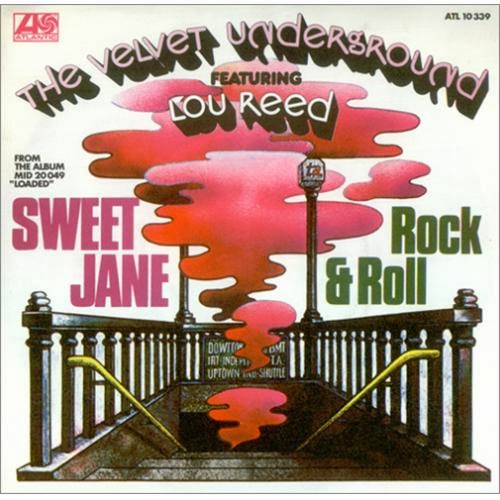
So we’ll begin with another contradiction. All that cynicism and distance that surrounds the public perception of ‘Lou Reed’ like a block of ice, how do we match that up with the fact that so much of his music is so fucking achingly sentimental, so nostalgic, so fixated on some fleeting moment of zen-like universal comfort, in spite of all the sneering and street hassle and leather daddy hi-jinks? Because that’s the essence that keeps me coming back to him really.. the former I mean, not the latter.
Of course, I guess I still like all the shrieking dissonance and hair-raising guitar noise and decadent droning plenty too (yes, I had the “John Peel played ‘Heroin’ and everything changed forever” moment same as everyone else, even if mine was closer to 1998 than 1968… and it speaks volumes, I think, that it sounded just as ‘what the fuck is this’ jaw-dropping at the dawn of the 21st century as it did when copies of the banana album first started to sneak over to these shores). But that’s not what I feel like discussing today, I suppose.
Let’s talk about ‘Sweet Jane’ instead. I don’t know if it’s Lou Reed’s best song, or even my favourite one, but it’s the one, I think, where that moment of calm, basic-level happiness he always seemed to be striving for was first fully illuminated.
I remember ages and ages and ages ago, reading the booklet that accompanied the cheap ‘best of the Velvet Underground’ CD that I bought shortly after hearing ‘Heroin’ on the radio, the writer saying something about how Lou Reed’s lyrics always seem to reflect this obsession with the idea of things being “alright” - and indeed, that writer was really on to something I think. In song after song, it is a state of unspectacular ‘alright-ness’ that is sought out and celebrated: “..it was alright”, “it’s gonna work out right”, “..everything was alright”, “it’s gonna be alright”, on and on, like some endlessly repeating mantra. And it’s not some great, transcendent moment of happiness or revelation of love or anything that he’s after either, it’s just… things are alright. Sitting quietly at home, looking out of the window, coffee on the stove. Sitting next to your beloved over breakfast, walking out to get groceries – whatever. Things are alright. I can dig that.
At heart, this seems to be where most Lou Reed songs (all of his more upbeat numbers, anyway) are coming from. In fact, maybe this realisation even allows us to take a more sympathetic approach to his legendarily aggressive attitude toward journalists and interviewers. Imagine, the poor guy sitting there in his apartment, savouring his moment of perfect alright-ness in the morning, when suddenly there’s some whiny jerk on the phone wanting to interrogate him about his sexuality and his drug habits, and David Bowie and Iggy Pop, and why his latest album sounds like he recorded it in a dog kennel. Awful. No wonder he got a bit shirty with them. Who wouldn’t? Why couldn’t they all just leave him alone? He had nothing to say. He probably just wanted to take in the silence, or put the radio on, sit back and enjoy his breakfast.
Anyway, it is this holy ‘alright-ness’, this quiet contentment, that “Sweet Jane” is of course really about. I know that there’s an actual Jane in the lyrics (of most versions), but if you think it’s just her who’s being hymned during the chorus, well…. I hesitate to say ‘you got it wrong’, but suffice to say you have a very different understanding of the song from me. Sweet Jane, as yelled exultantly on the pre-‘Loaded’ demo version, hesitantly whispered on the ‘Live ‘69’ version, dutifully intoned on the album version, represents instead a state of mind; an ideal place to be; a totem of the kind of basic, everyday happiness and contentment that most men & women seek, most of the time. Quietness, and companionship, and the sun shining in in the morning.

The first of these, chronologically speaking, is the ‘Live ‘69’ version, when the song was still in pretty embryonic form, before all that business with Jack and Jane had come into being, and in many ways this version is all the more perfect for its simplicity. As that indelible guitar riff rolls out slow and steady, the band sounding like they’ve just been taught it and they’re following the leader to establish the feel, Reed goes straight to the heart of the matter, softly intoning the verse that ended up being the big emotional crescendo of the completed version, repeating it several times, rolling the words around his mouth like their message is still in the process of filtering down through his heart/brain: “anyone who’s ever had a heart / they wouldn’t turn around and break it”; “anyone who’s ever had a dream / anyone who’s ever played a part”.
If we were to listen to this version without the context provided by subsequent recordings, it could perhaps be read as a pretty sad song. Could the Sweet Jane he’s addressing in the chorus have ditched him? Did SHE turn around and break it? Well if she did, Reed doesn’t sound too upset about things. It sounds like the nostalgic warmth of the happy memories are enough to keep him going, resigned to his fate as the totemic Jane of the chorus (like the verses, elucidated quietly, carefully and somewhat hesitantly here) assumes her wider, cosmic significance: Sweet Jane.
So here then, on the demo version, we have Jane and Jack, though they’re a little different from the ones you may know if you’ve only listened to the eventual album version. There’s no rock n’ roll band (HUH!) here, but instead it opens with what is possibly my favourite line in any version of this song, and one that just suits Lou Reed’s voice so well:
“Standing on the corner / thinking of the best..”.
He could have just left it there really. This song, his whole career. Just so, so, just… y’know. Says it all really. But nonetheless, the show must go on. This time round, Jane is in her corset, and Jack is in his vest – which, with no hetero-normative-ness intended, I much prefer to be honest. The brief intrusion of ‘Transformer’-era gender-bending when Lou reverses the garments on the album version strikes a bit of an odd note, I’ve always thought, in the middle of a set of verses that otherwise go out of their way to celebrate a very conventional, straight-laced kind of domestic contentment.
(In a way, the verses of this song seem like Reed’s attempt to remind his audience, “hey, normal people have feelings too” – a very humane and somewhat brave gesture in the midst of all the late ‘60s ‘squares vs. hipsters’ type palaver, especially from the man who’d soon reinvent himself as the “king of the underground street freaks” or whatever.)
So, thus far then, probably my favourite version of the song’s opening verse, but sadly I think he drops the ball a little as the demo version moves on to the second verse (the only drawback of this otherwise brilliant recording). Whereas the album version introduces ‘children’ and ‘villains’ into proceedings, here Reed just assigns all of his various rose-tinted, old worldy activities (blinking eyes, studying rules of verse, fainting, blushing etc.) simply to ‘women’ and 'ladies', rather giving the impression that he’s going off on some tirade about the decline of old fashioned femininity or something. I doubt that was the intent; In actuality I think he probably just hadn’t filled out this bit of the lyrics much yet and was just filling the gaps etc., but still – could be better.
What REALLY elevates the demo version though is the gloriously raw, uproariously sloppy nature of the band’s playing here, which at a push you could even see as prefiguring the work of such paragons of DIY earnestness as The Television Personalities or Half Japanese, complete with percussion provided by what sounds like someone with zero sense of rhythm banging two saucepans together (I think we can safely assume Mo Tucker was on maternity leave by this point). All of this serves to lend things a kind of strained, raggedly emotive genius that completely overwhelms any lyrical reservations as soon as the song hits the chorus and the band bellows together, out of key and barely in time with each other: SWEEET JAAAANE!
God, it’s just so beautiful, their inhibitions seeming to vanish as the song goes on, each chorus repeat adding more gusto, more chaos until the final ones, following the big “wouldn’t turn about and break it” crescendo and the peculiar baroque bridge section (Reed did a lot of these, but they rarely worked as well as this one), just fly free, really nailing the sheer joyfulness of the song’s message. NA NA NA NA, NA NA NA.
In this version, ‘Sweet Jane’ isn’t just a chorus, or a song title, it’s a universal exclamation, something to shout from the hilltops whenever you feel that everything is alright. It’s just it man, it’s right there. With this song as a vessel, and that whoever-the-hell-it-is banging those saucepan lids, this bunch of uptight white guys really rouse the spirits and raise the soul to new heights.
Often of recent, I’ve felt like turning to my own beloved and shouting, SWEEEET JANE!! She’s not much into the Velvets though, so it would probably just freak her out. If you’ve read up to this point though, I guess you must be into the Velvets. You know what I’m saying. You know it’s not all about heroin and sneering and Andy Warhol. We can do the secret handshake, and can leave this post right here because what else is there to say about music you love this much.

(1) The demo version is available on CD 2 of the “Fully Loaded” special edition of ‘Loaded’ – an absolutely essential document for all Velvets fans, by the way. I mean, I love the original album too, but I think about 75% of the demo tracks are so, so much better than their album equivalents, and there’s a bunch of other great stuff too, and, and...
Labels: deathblog, Lou Reed, rambling, The Velvet Underground
Sunday, November 03, 2013

Come on in, pour yourself a drink!
Let us assume that you’re a guest in my wood-panelled Victorian study, and that I have already helped myself to much refreshment from the crystal decanter. After an initial show of friendship, I’m basically going to talk at you indefinitely in a semi-aggressive fashion whilst you sit there uncomfortably and try to find a non-rude way to make an exit. Is that acceptable? Well afraid it’ll have to be. If you don’t like it you, can start your own weblog.
(I will, by the way, be speaking in the voice of Andre Morell, if that helps you make your mind up either way.)
Ahem.
----
I know I’ll be upsetting any solo Lou partisans who happen to be reading right off the bat here, but for me, The Velvet Underground is all.
And even if Lou took all the songwriting money, I definitely prefer to see the band’s achievements as a group effort. As such, I think it's notable that ALL of the VU recordings sound spontaneous and passionate, whereas pretty much all solo Lou Reed stuff sounds like carefully groomed moments of "rock n' roll" spontaneity being performed by actors under laboratory conditions. I could never really get into that. Lots of "oh, well, theoretically I suppose this is quite a good song, but..." moments whenever I've tried, in between the frequent bouts of “by god, I’m turning this off right now”.
That said though, recent adventures in learning to love the collected works of such contrary buggers as Alex Chilton and John Cale have reminded me that, when you’re in it for the long game, there’s more to the appreciation of a record than immediate aural pleasure and basic emotional connection. And surely, no one more so than Lou Reed managed to exemplify that (very ‘70s) idea of using whole decades’ worth of mass-produced vinyl and fan-produced cash to sketch out some kind of grand, conflicted, ever-changing statement about something that nobody ever quite seemed to ‘get’, but that keeps the die-hards fascinated & guessing, and the detractors shrugging and suffering, to this day.
So yes, a proper excavation of the Reed back catalogue has long been on my ‘long-list’ of things to get around to, now that I’ve reached that point in life where I can buy 2nd hand LPs with impunity and sit around laughing at the drum sound and so on, free from concerns of contemporary relevance or financial stability. But I haven’t done it yet. Which is pretty damned inconvenient for the purposes of writing a conventional obituary.
It’s funny actually - when the news filtered through last Sunday night, perhaps my third or fourth thought was “well that's one tough fucking obit that a few hundred journalists are going have to file by the morning”.
For years the whole “Lou Reed is an arsehole” meme has been a running joke in the music world, and it is an idea that I very much abided by through my (ahem) youth, maintaining a strict “Velvets = BRILLIANT / Solo Lou = GHASTLY” policy with a stubbornness that precluded any hope of flexibility. I once even drew a cartoon (subsequently lost) of Sterling Morrison and Moe Tucker trapping Lou’s soul in a magic crystal on the night that he left the VU.
But these days, now that I find myself feeling rather more sympathetic toward the intentions of these – how you say? – “grumpy old bastards who waste our time making difficult, unlovable records”, I don’t know if the “Lou’s an asshole” approach holds much water to be honest. Certainly, it’s at the very least an uncharitable simplification of his character: for every anecdote you read about him being a dick to someone or making a really bad decision, there's another story about him being incredibly kind and eloquent, and so on.
And I’m certainly not here to try to whitewash him for all the occasions on which he undoubtedly did act like a prime arsehole, but…I dunno… I guess on reflection I tend to see him more as someone who was always pushing awkwardly towards some kind of... *something* that nobody except him ever quite managed to see, both in terms of his music and his personal conduct. Kind of tragic in a sense, I suppose. Millionaire rock star who never managed to make anyone 'understand' – boo hoo hoo, etc.
(And whilst we’re on the subject, how did he even manage to become a millionaire rock star in the first place? I mean, I suppose the singles off ‘Transformer’ must have done fairly brisk business, and sales of the VU albums must have snowballed since their reissue in the ‘80s, but nonetheless - he’s never really been a big unit shifter, has he? He’s never had a ‘hit’, outside of college radio / indie land. In fact, can you think of ANYONE who’s managed to assume the position of an “I can do whatever the hell I like” major label-backed legacy artist on the basis of such little quantifiable commercial success..? That in itself must count as some kind of an achievement… ‘fake it ‘till you make it’, perhaps?)

I guess he was just a bit of a complicated, mixed up guy really… as were all the members of the Velvet Underground, come to think of it.(1) In fact, read an interview with each of them in turn and it's amazing that they managed to work together for so long without killing each other. But then presumably that clash of personalities is what helped make their output so astonishingly bold and varied.
For, brace yourself for Ultimate Cliché here, but one of the things that makes the Velvet Underground so continuously fascinating is that they were a band built from the start upon a foundation of total, overlapping contradiction:
Often held up as progenitors of punk, in ‘White Light, White Heat’ they recorded the most certifiably PUNK album of all time. Yet they also represent the birth of the strain of self-aware, collegiate art-rock (later indie) music that by-passed the atavistic guts of ‘punk’ altogether when it began to take off via their disciples in the later ‘70s and ‘80s. (In stark contrast to just about every other mid’60s rock group, three quarters of the classic VU line-up had a background in post-grad academic study, a fact that showed through in their aesthetic presentation as well as their lyrical & musical pretentions – “kinda faraway / kinda dignified”, quoth Jonathan Richman).
Frequently pigeonholed by lazy copywriters as a band defined by their cynicism, ‘coldness’ and embrace of decadent, taboo subject matter (an instant cliché aided by the shades, turtlenecks and grim demeanour of their Warhol-era publicity), The Velvet Underground simultaneously produced some of the most off-handedly honest, humane and open-hearted music of their era - not to mention the most conventionally melodically beautiful. And this isn’t the Cale-era / Yule-era dichotomy it’s often assumed to be either: it’s right there from the word go with ‘Sunday Morning’ and ‘I’ll Be Your Mirror’, whilst the departure of Cale and his supposed avant garde tendencies led straight on to the band laying down some of the most extended droning and shrieking of their career (cf: circa ’69 live versions of ‘Run Run Run’ and ‘What Goes On’, not to mention total weirdness like ‘The Murder Mystery’), whilst Cale himself went straight on to make a really boring country-rock album! (Post-Warhol, the Velvets also spent quite a long time wearing flares and floral-patterned shirts, growing unruly hair and grinning at the camera, if anyone bothered to notice.)
Sometimes pegged (justifiably) as marking the point at which rock music shook off the stigma of merely imitating black music and became an identifiably ‘white’ form for the first time (remember the stories about Lou keeping a dollar jar to fine anyone who played a blues lick in rehearsal?), Lou and Sterling Morrison both still somehow managed to talk up their background in dirty, no-good r’n’b clubs, unashamedly playing choppy, urban 12-bar boogie during the height of psychedelia, and pledging eternal allegiance to Bo Diddley and John Lee Hooker whilst sneering at Bob Dylan and Frank Zappa.
I mean, how the hell did that work, even on a practical level..?! Who knows, but you certainly can’t argue with the results.
And I guess it was this spirit of beautiful, explanation-defying contradiction – which seemed so effortless and instinctive when the Velvets did it – that Lou tried to cling to through his solo career, with what I think we can safely classify as “mixed results”.
I was joking earlier with the magic crystal / soul extraction thing, but nonetheless, I think some big part of Reed’s world definitely changed forever after that night at Max’s Kansa City in 1970, when he threw in the VU towel. And as ever with Lou Reed and The Velvet Underground, there’s mystery hovering around the whole issue, never quite giving us an answer. Sterl recalled that he knew something was up, because Lou suddenly wanted to introduce everyone to his parents - they being strict and straight-laced upstate New York upper-middle-class types from whom he had been long estranged.(2) As I recall, the rumour goes that after that, Reed spent a year or so keeping a low profile back at the family home, as mom and pop tried to medicate him back to ‘normality’, to the extent that he was on the verge of packing it in and getting a job in a lawyer’s office.

We can laugh about it now maybe, but for any original fans keeping the faith at the time, this plus ‘Squeeze’ must have signalled a rather depressing march into the wilderness. Bowie stepped in with a guiding hand, and the rest is history that we don’t need to plough through here I suppose….
But in its own way, that weird, thoroughly forgotten first album already highlights everything that Lou had lost and (according to my current opinion at least) never really regained.
I know I was going on about it earlier, but what was really lacking was the sense of spontaneity. Lou Reed was, intermittently, one of the most sublime rock/pop lyricists who ever lived. But his gift always worked best when encountered in an elusive, unpredictable context. And whilst sadly it took no time at all for Solo Lou to become the kind of guy who liked to see his words dried in ink, preserved forever as nuggets of rather underwhelming ‘genius’ for the faithful to pore over, VU Lou was a very different dude. Wonderful things seem to pour from his croaking gob throughout the duration of the Velvets recording career, floating off into the ether never to be heard again, and if there are bits on the studio albums where he sounds like he’s making this shit up as he goes along, that’s because he probably WAS.
One of the great joys of excavating the VU’s demos and live recordings is in hearing the way that the content and delivery of his songs developed and changed and changed again, never really reaching any ‘complete’ version as he went from irreverence to piety and back again at the flip of a coin, his capacity for lyrical improvisation often bordering on the extraordinary.(4)
As a more earnest young fellow, I used to get a bit pissed off with various 'placeholder' lyrics that seem to survive on many of the VU’s not-released-at-the-time recordings – my assumption always being that these were just some nonsense and bad taste joke stuff that Lou knocked out as a guide track, meaning to replace them with something more refined at a later date. But now I think I understand that such improvisation was the basis of his whole approach to song-writing (or at least, the best, least preppy parts of his songwriting) – an approach in which the actual content of the verses very much came last, in which the song’s title and emotional ‘feel’ were instead very much the key component, slowly subliminating the accompanying verbiage over a matter of months or even years.
True, the undercurrent of cheery sexual violence that mars the otherwise incomparably brilliant ‘Foggy Notion’ still grates (presumably the work of the same heeeelarious Lou Reed who deadpanned through ‘I Wanna Be Black’ many years later), but whatever, I can live with it. And I certainly don’t have to force a grin for the nonsense verses on ‘She’s My Best Friend’, which provide a black horse pick for one of my favourite Reed lyrics ever:
“Here’s to Newspaper Joe / knocked his teeth on the floor / caught his hand in the door / I guess that’s the way the news goes”.
Edward Lear eat your heart out. Cracks me up every time.
The thing about stuff like this though is that it only works once – do it today, and then throw it away. I was quite depressed when I once listened to an (extremely bad) version of ‘..Best Friend’ that Reed re-recorded in 1976-ish, to hear all that silly old rubbish still there, in exactly the same place, as if Lou had listened back to the old recording, scratched his chin and thought “hmm, yes, that is rather amusing”, grimly carving it for all time into the Official Lou Reed Book of Beautiful Poetry (I bet they keep a copy in a glass case at the ‘Rock N Roll Hall Of Fame’), the rancid icing on the lumbering, digital funk hash that his band of the day were busy making of the breezy, strummin’ bubblegum of the Velvets original.
I want to stay positive though, so let’s back straight back to the ‘60s and slam the door.
I was meaning to continue with an emotional trawl through the various extant versions of one of my favourite Reed numbers, ‘Sweet Jane’, but it is now the weekend. And I promised myself I’d post this at the weekend, so… you’ll have to excuse me gentlemen, I’m not quite feeling myself this evening, and, I….
…..
..
Nurse! Nurse! Come quickly!

(1) Well except Doug Yule I suppose. He just seems like a nice bloke who wanted to play some tunes.
(2) And enough with that “bard of Manhattan” jive by the way – like just about all the most successful New York art/glam/punk types, Lou moved in from elsewhere, moneyed and educated in advance.
(3) I think it’s kind of a great cover actually, but total WTF in the context of a Lou Reed album.
(4) Although we’re obviously just talking Reed here, you can of course check out ‘Temptation Inside Your Heart’ for a demonstration of how brilliantly the VU’s collective spontaneity and irreverence toward their own work functioned – hopefully it speaks for itself.
Labels: deathblog, Lou Reed, rambling, The Velvet Underground
Sunday, October 27, 2013

I was actually all ready to go with my annual Halloween compilation this evening, but in honour of this, I’ll leave it a few days and post it mid-week.
Obviously it’s difficult to come up with a proper tribute to a figure as multi-faceted and divisive as Lou Reed at the drop of a hat, but during this week I’ll try to come up with some stuff to do him justice, maybe post next weekend.
Normally that would be a case of busting out an artists’ back catalogue and having a good ol’ session of remembrance, but there’s no point doing that this time, because very little time goes by when I’m not listening to, or thinking about, some aspect of The Velvet Underground’s work.
Just this morning, the original album version of ‘Waiting For The Man’ popped up on my mp3 player as I walked out to do some grocery shopping, reminding me for the first time in a while of how great and unusual the recoding and arrangement is on that track, making me wonder about the fuzzy edge on the guitar, and about how radical the relentless droniness of it still sounds, and about who was playing that one note piano bit when all sources say that track was probably a live take with no overdubs. Just under two weeks ago, I was riding back from the airport with ‘Live ‘69’ on my headphones, making me cry and then cheering me up again and making me cry in a happy way. Various times recently, I could have been found striding around the place lost in the incredible demo versions and ‘Sweet Jane’ and ‘Rock n’ Roll’, feeling right jubilant and nudging them up my “songs I’d probably like played at my funeral” list.
That’s the space of about a month. I’ve been listening to the VU since I was about eighteen. I’m not sick of hearing anything that they recorded yet. Hell, if they’d only ever recorded one song, I probably wouldn’t be sick of it yet. Some kindsa love, the possibilities are endless, and for me to miss one…. etc etc.
So there ya go.
We’ll return to all this later anyway. In the meantime, don’t let it spoil your Halloween.
Labels: deathblog, Lou Reed, The Velvet Underground
Monday, February 01, 2010
Pointless Lists Week.
#4 The Five Bands Whom I Own The Most Music By, according to iTunes.
1.The Velvet Underground (29 albums; 251 songs; 2.09GB)
2. Guided by Voices / Robert Pollard (36 albums; 592 songs; 2GB)
3. Sonic Youth (26 albums; 262 songs; 1.43GB)
4.The Mountain Goats (31 albums; 354 songs; 1.29GB)
5. Neil Young / Crazy Horse (26 albums; 221 songs; 1.20GB)
Monday, March 02, 2009
Velvets Ephemera # 1: Before The Banana

Above we see what could well be the earliest known photograph of The Velvet Underground, taken in 1965, before Mo Tucker joined, before Andy Warhol & co rescued them from the coffeehouse circuit. From L to R that’s Sterling Morrison, Lou Reed, John Cale and Angus Maclise, all hanging out on a picturesque NY rooftop and, you’ll note, all carrying the tools of their dubious trade. (Click for a larger view - looks like a radical axe Sterling's got there!)
I’ve been meaning to find an excuse to post this photo ever since I nabbed it from If Charlie Parker Was a Gunslinger.. a few months back, and now I’ve got one. Over the Christmas holidays, I finally got around to reading Uptight, the Victor Bockris/Gerald Malanga book about The Velvet Underground. Though a pretty good read, it’s not exactly the comprehensive work on the band that I’d been hoping for. It’s very good on mapping out the momentum behind the band’s formation, their interaction with the Warhol set and the rise and fall of the Exploding Plastic Inevitable (as you’d expect, what with Malanga being very much the man on the scene), but coverage of the post-Cale era is sketchy, and detail on the musical side of things is lacking throughout. Call me a geek, but, whilst the explosive mixture of characters and circumstances surrounding the Velvets is fascinating in itself, I would dearly love to find out more about when, where, how and why the different sets of songs had their genesis, what equipment the band was using, exactly who played what on different recordings and tours and what brought about the drastic changes in direction that seemed to take place between each studio album.
Beyond a few tantalising details and interview quotes making reference to customised guitars, mishandled song-writing credits and unconventional recording techniques, the Bockris/Malanga book largely ignores such issues, concentrating instead on the personalities and assuming the music was just THERE, the end result of these guys just doing what they do, because they’re, like, y’know, geniuses and whatever.
Perhaps a better way to gain an understanding of the group’s musical development (or else to deepen the mystery further) is to do what I’ve been doing over the past year or so, and take the plunge into the labyrinthine world of Velvet Underground bootlegs, demo recordings and other such ephemera.
Now, given their position as the – ahem – ‘ultimate cult band’, with over three decades worth of obsessive pre-internet fandom behind them, trying to get an angle on the Velvets bootleg scene is a grim and forbidding business to say the least. There seem to be literally hundreds of discs out there, most baring mysterioso, fan-baiting titles and misleading (deliberately or otherwise) track info, all essentially concerned with repackaging what is in fact a pretty slim body of unreleased material and decent live recordings in various states of disguise and disrepair. In addition to this, there’s also quite a lot of worthwhile extracurricular material that HAS been granted official release, but that still lies beyond the grasp of the casual fan, tucked away as it is on the difficult to find ‘Another View’ album, or the pointless/expensive ‘Peel Slowly And See’ box set.
Hence the idea behind this series of posts is that I will attempt to save you the effort by highlighting (and, where appropriate, posting) some of the most eye-opening and essential pieces of Velvet Underground ephemera in roughly chronological order, writing some stuff to put them in context, and simultaneously warning you of other boots worth avoiding.
Does that sound good? – well, either way, I’m gonna do it, so let’s crack on!
Going way back in the Velvets timeline, to before even the above photo was taken most probably, we have the extraordinary ‘demo reels’ that appear on disc # 1 of ‘Peel Slowly And See’.
From glancing at the box set’s tracklisting, you might assume these tracks were just rough sessions for the banana album, but they’re a LOT more interesting than that, and are in fact entirely unlike anything the Velvets recorded subsequently, offering a fascinating insight into the group’s earliest incarnation as what was essentially an open-ended Reed/Cale songwriting partnership that developed shortly after the two met whilst promoting Reed’s Pickwick Records quickie ‘The Ostrich’.
In the Bockris/Malanga book, brief reference is made to Cale making tapes of the band’s earliest material which he sent to some of his contacts in the UK, apparently sparking “great interest” in some quarters, shortly before the band hooked up with Warhol and embarked on a different course entirely, failing to follow up said “interest”. Now, I may be completely off-base here, but I would ASSUME that what we have in front of us is those very tapes, presented in awkward documentary style on the box set as a series of lengthy tracks, each comprising multiple takes of a single song, complete with false starts, abandoned versions etc.
It is immediately obvious is that, whilst the bare bones of some of their best known songs may be in place, the version of the Velvet Underground that made these recordings sounds strikingly different to the one that was playing for Warhol’s crowd but a few months later. For all that Lou may have subsequently liked to frame the Velvets as growing out of “just another Long Island rock n’ roll band”, and for all that Sterling Morrison may have taken every opportunity to badmouth the notion of folk music in interviews and declare his dedication to the darkest, dirtiest rock n’ roll, there’s no avoiding the fact that these recordings are, well…. folk music. Pretty weird, unconventional folk music admittedly, but no electric instruments, percussion or even a hint of r’n’b muscle are present. It’s obvious that neither Maclise nor Moe are featured on these songs, and it seems likely that Sterling wasn’t around for them either. With each track featuring just Reed & Cale’s vocals, a single acoustic guitar and one additional instrument per song (slide gtr, viola, harmonica, or just a hand pounding a desk to keep time), I strongly suspect that this is just John and Lou sketching out their song ideas on tape.
The other thing that’s obvious here is, to put it to you in eight letters, JOHN CALE. Taking lead vocals on all of the best songs, and sounding as compositionally/lyrically involved as he is musically, he definitely comes across as the stronger force in the partnership here, making his subsequent retreat to the position of musical sideman, and all those ‘Reed’ song credits on the first album, seem even more suspect.
Cale’s vocal on ‘Venus in Furs’ in particular is beautiful, as the song is drawn out into a eerie psych-folk lament, his delivery of the “I am tired / I am weary..” section managing to transcend the shabby S&M subject matter altogether, echoing the kind of sonorous, mist-shrouded celtic plainsong that he would go on to explore from time to time in his solo career. It really makes me wish that he’d been able to sing on the album version – perhaps the only thing that could have made that extraordinary track more haunting, weird and timeless than it already is.
‘Prominent Men’, with Lou taking lead vocals, is, I’m sad to report, a fairly obvious Dylan rip off, and, despite being played with gusto and a few fruity lyrical lines, doesn’t really move much beyond that status. Perhaps it was for precisely this reason that it was dropped from the Velvets roster of songs pretty swiftly and, to my knowledge, has never been heard since.
Even more curiously, ‘Waiting For The Man’ is performed here in a manner that seems somewhat derivative of The Fugs (who were pretty much the kingpins of ‘underground’ music in New York when the Velvets were starting out), with Lou’s voice still sounding kinda nasal and Dylan-y as he and John holler along together and the music approaches a kinda rough, jaunty beatnik swagger, incorporating harmonica breaks and some utterly insane Cale viola destruction in the middle. Of all the songs here, this is the one whose tone changed the most over the course of the following year. Also, listening carefully, there are definitely two guitars here, so I guess Sterl might have been around for this one too.
Musically, ‘Heroin’ adheres pretty closely to the version we know and love, although at this stage it seems to have had a quite different set of lyrics (markedly less interesting ones than those used later), and lacks both the slow-burn build-up and incendiary descent into improvised noise that help make the final version so definitively mindblowing. It'll still give you the same old shivers though, if you can get over another Dylan-ish vocal.
‘All Tomorrow’s Parties’ seems to be the song they had most trouble bringing to life – the guitar arrangement is quite complex, and the full track on the box set bears witness to near twenty minutes of abandoned takes, false starts and cursing.
The melody has a far folkier, more organic feel to it than the stark collapsing-glass-skyscraper majesty of the Nico led version on the album.
The most exciting find here though is the superb rendition of ‘Wrap Your Troubles in Dreams’, a song that featured in many early Velvets set-lists and was eventually recorded by Nico for her ‘Chelsea Girl’ album. Although the song is initially striking simply for it’s minimal, folk-derived melody and sinister, dirge-like repetition (which needless to say, Nico made the most of), I think ‘Wrap Your Troubles..’ reveals itself here as an incredibly distinctive and beautiful song, contrasting verses filled with increasingly desperate images of brutality and decay with a calm, mantra-like chorus that, much like ‘Heroin’, seems to be urging a comforting, solipsistic escape from external woes. True, some of the lyrics verge pretty heavily into teenage quasi-symbolist garbage (“..excrement filters through the brain / hatred bends the spine..” anyone?), but nonetheless, the song is as perfectly realised as any of the early Velvets material, carrying with it the kind of baroque atmosphere and singular power that would have fitted in perfectly on the banana album.
For your listening convenience, I’ve cut each of these songs down to one complete take, and am posting them as mp3s below. Well worth a listen.
The Velvet Underground – 1965 Demos
Venus In Furs (take two)
Prominent Men (take one)
Heroin(take one)
I’m Waiting For The Man (take three)
All Tomorrow’s Parties (take three)
Wrap Your Troubles In Dreams (take two)
The only other significant set of pre-first album Velvets recordings that persistently pop up are the ‘Rehearsal at the Warhol Museum’ tapes, supposedly from a tape recording made by Warhol himself of the group practicing at the Factory sometime in ’66.
These are, sad to report, a definite ‘hardcore fans only’ concern, proving, if nothing else, that even the most inspired bands have their off-days. Recording quality is roughly dictaphone level, with vocals and percussion largely inaudible and Cale’s bass predominating. It sounds like a pretty shitty, soul-draining rehearsal too for the most part, as the band shamble through a few sloppy, nameless blues jams, throwing in the odd cheesy ‘lick’ and stopping occasionally to mutter despondently. A bit of a downer.
I recall reading somewhere that these recordings were first heard when they were broadcast at some sort of Warhol retrospective/memorial event, where they were illicitly recorded by some guy pressing a tape recorder against the speaker, leading to what I can only imagine must be the most pointless and mystifying boots in rock history – a lo-fi tape recording of a public broadcast of another lo-fi tape recording of a really crappy band practice. I’ve not heard that one, but I suppose it could well venture into territory where the scuzz and ambience of a recording, the sense of unfathomable chronological and cultural distance, becomes far more affecting that the music itself – a theme we’re sure to return to in later instalments of this series.
A couple of moments of interest on the Warhol museum tape:
There’s a bit where you can hear Lou apparently trying to teach Nico to sing Venus In Furs, without much success, as Sterl and Cale jam rather slickly and horribly around the song’s central theme. There’s also a pretty interesting attempt at a really nice sounding Reed song called ‘Walk Alone’ – it’s only appearance as far as I know.
The best bit is a try-out of a song called ‘Miss Joanie Lee’ (another abandoned Reed original?), a tight John Lee Hooker-esque boogie that prefigures ‘Run Run Run’ and ‘Foggy Notion’ as Lou and Streling’s guitars momentarily coalesce into some definitive Velvets drone/choogle, like the blinding sun emerging from cloud, before the whole thing sinks into a bunch of weird, interminable noise. ‘Blues jam’ = URGH.
Here are those two bits, anyway.
The Velvet Underground – Rehearsal At The Warhol Museum
Walk Alone
Miss Joanie Lee
NEXT UP: The holy grail to some, but it does exist: some seriously good shit from the Exploding Plastic Inevitable era.
First though, I'm gonna post some stuff about new bands, just to even out my karma.
Labels: 1960s, ephemera, The Velvet Underground
Thursday, February 14, 2008
SAINT MOE’S DAY

Maureen Tucker’s “Life In Exile After Abdication” (released on the 50 Skidillion Watts label in 1989) is totally, like, the greatest lost classic album that has crossed my path so far this year.
Maureen’s first solo album, 1980’s “Playin’ Possum”, was a brilliant bit of off-kilter, homemade rock n’ roll, but “Life In Exile..” is a more professionally recorded affair featuring Moe’s vocals, drums and punk-primitive guitar backed up by various big indie scenester names, and it is simply fucking brilliant.
Sadly (tho predictably) it is out of print at the moment, but go and do whatever you must in order to obtain a copy, and then you too can punch the air in joy as Moe teams up with Sonic Youth in their skronkin’ late-80s prime to blast through a bunch of totally righteous, punk songs about the frustrations of being forced to work minimum wage supermarket jobs to feed her family, and then clap and sing along as she goes it alone to knock out the finest renditions of “Goodnight Irene” and “Bo Diddley” heard in recent decades. Fantastic!
It has long been my belief that when Lou Reed announced he was leaving The Velvet Underground in 1970, Mo Tucker and Sterling Morrison made a supernatural pact of some kind, and stole Lou’s creative lifeforce, trapping it in a crystal (or something) to ensure that it's power was used for good rather than evil, leaving their erstwhile leader to stumble through his solo career in an eerie, zombie half-light, living off the pale, negative reflections of his genius that remained. (Doug Yule was pissed that they left him out of the deal, which is why he insisted on spending the next few years running the band’s name into the ground.)
Given Sterling’s decision to quit music entirely after the Velvets (perhaps to spend his remaining years simply contemplating his portion of the Lou Lifeforce Crystal, dreaming of a perfect, eternal ‘What Goes On’ rhythm guitar strum, spreading like a heartbeat across the universe), that by my calculations makes Moe the true guardian of the spirit of the VU, and on "Life In Exile.." she ably proves her worth in this capacity, no more so than when she takes on ‘Pale Blue Eyes’.
Now, whilst I would gladly hold a copy of the Velvet Underground’s third album in front of my heart to shield me from bullets, I’m afraid I’ve got to break from VU orthodoxy and state plainly that Maureen’s 1989 take on Pale Blue Eyes is so, so perfect that it makes the original version sound like a vague, unsatisfactory demo by comparison. Moe’s singing always conveys a pure honesty of soul that cannot be faked, and her delivery here instantly redeems this most beautiful of songs from the lurking shadow of Lou Reed ambiguous-gobbletigook cynicism, imbuing it instead with an unshakeable pathos and self-belief that goes to the heart of everything that was great about the Velvets, is great about Maureen Tucker, is great about music.
It’s like she took her portion of the crystal out of the little pot above the fireplace, took it with her to the studio, and just let it shine. Towards the end of this track, as the song takes on a mantra-like quality, with Moe beating down on the tom-tom drums and Thurston or somebody playing epic lead guitar as the vocal coda lingers on above, echoing endlessly... honestly, I have never heard anything so wonderful in all my life.
So there you go; take it or leave it.
Today is St. Valentine’s Day of course, and you may recall that I posted a version of ‘Pale Blue Eyes’ on Valentine’s Day last year. I was a bit down in the dumps then, and I’m not really anymore, but pure coincidence has nonetheless led me to start contemplating the same song exactly a year later, so hey, why don’t we try to make a tradition of it?
Send me your own suggestions for great variations on Pale Blue Eyes via the usual address - or record your own? - in time for next year, and the winner gets a candlelit dinner for two.
Mp3 > Maureen Tucker – Pale Blue Eyes
Labels: Maureen Tucker, The Velvet Underground, Valentine's Day
Thursday, October 25, 2007
ROCK N' ROLL VIDEO EXTRAVAGANZA!
It seems to have become very much the done thing of recent for weblogs to put up posts comprising a bunch of embedded youtube clips, and seeing as how I clock up the majority of my casual internet time at work, this tends to annoy me, as I'm generally hoping for a bunch of new WORDS to get me through the day, rather than such off-limits audio/visual antics.
So first off, I'd like to stress that this isn't going to happen very often, and that words are still going to be the heart of this blog, but, er, I haven't had a chance to get much writing done this week, but I have come across some truly extraordinary video stuff of the kind I probably would have paid $$$ for on fuzzy bootleg VHS in the pre-internet era, so why not go ahead and let these brief pixellated bursts of long-gone pop cultural insanity keep you enthralled for a while.
First up, here's a group called The Preachers beating the hell out of "Who Do You Love?" on some regional(?) American TV show circa 1965. Talk about "punk-primitive", these guys are positively devolved. Imagine being a teenager and catching something like THIS on the local equivalent of 'Top Of The Pops'! Man, I was born 30 years too late...
Also on a garage tip, here's a great TV spot of The Standells miming through "Dirty Water". You know, until now I had no idea that the lead vocalist in the Standells was also the drummer, throwing out all those goofy, snarling ad-libs and keeping the beat at the same time? And he's a dead ringer for Luke Skywalker in the first Star Wars film as well! Amazing stuff. Why, those crazy guys... who'd have guessed they began life as a phony rock n' roll combo playing tame supper club gigs until Ed Cobb decided to make them into a "garage" band to cash in on a bit of the Byrds / Seeds action..?
Disappointingly, Youtube provides slim pickings when it comes to The Velvet Underground. Most of the clips on offer seem to be hack jobs looping brief snippets of film into contrived "videos" with the studio recordings playing over the top (just check out the piss-poor 'video' for Sunday Morning, which repeats about 50 seconds of Lou and Sterling strumming acoustic guitars and Cale on the piano ten times and purports to capture the band 'writing' the song). All the available footage seems to consist of Warhol-endorsed promo stuff for the first album (when they never took their shades off), and sadly it seems like nobody bothered to point a camera at the band at any point between 1967 and the 1972 reunion shows.
About the best thing on offer is this video of the band - including a strung out Nico briefly contemplating a new career on bass before deciding against it, and a weird toddler on percussion - lurching through a segment of the druggy jam that sometimes turns up on bootlegs as "A Symphony of Sound" (ha!). Worth watching just for Mo Tucker, demonstrating once again why she is the greatest drummer of all time; everyone else in the room (except maybe the kid) is in "I don't care maan, I'm a drugs.." mode, but Mo's just layin' it down regardless! (Warning: camera operator quite possibly stoned, or a child.)
Also, here's a tantalisingly brief clip of the VU playing a vicious "Venus In Furs" at some uber-cool basement party, with Gerald Malanga doing his whip thing and a bunch of self-absorbed, cavorting hipsters (dig the guy in the trenchcoat). More of this sort of thing please, if anybody's got any! I KNOW there's some great Velvets footage out there somewhere!
This next one should serve to aptly demonstrate why I almost paid £17 a few weeks back to see The Micragirls supporting John Spencer's new band. I've done the math, and they are my perfect band.
I may not be able to find any records to buy by Wichita, Kansas nerd-punk/proto-indie(??) legends The Embarrassment, but amazingly, the grace of the internet does give me access to a bunch of fantastic DIY videos they made in 1981! Here's the one for their 'hit' "I'm A Don Juan", which you may recall from disc one of the Rough Trade Rock n' Roll compilation album. What can I say: my new heroes.
And this video - for "Don't Choose The Wrong Song" - actually manages to be even better! I can't quite tell whether these guys are trying to do a macho MTV video thing and getting it horribly wrong, or doing a self-deprecating spoof of such and getting it horribly right, but either way, this sums up everything I love about this band: aggressive, unnerving, hilarious, defiantly homemade, musically shit-hot, really fucking odd and.. I dunno.. just watch it.
Guess what? I'm going to see The Donnas on bonfire night! Sadly the gig's not tied in with bonfire night in any sense. I mean, they're Americans, they don't have bonfire night. And I've lost track of the band's activities over the past few years, so I don't know if they're still as great as they used to be. But still. The Donnas. Aah, simple pleasures.... sit back and enjoy, and proper weblogging service will be resumed shortly.
Labels: the donnas, The Embarrassment, The Micragirls, The Preachers, The Standells, The Velvet Underground, videos

Archives
- 05/01/2004 - 06/01/2004
- 06/01/2004 - 07/01/2004
- 07/01/2004 - 08/01/2004
- 08/01/2004 - 09/01/2004
- 09/01/2004 - 10/01/2004
- 10/01/2004 - 11/01/2004
- 11/01/2004 - 12/01/2004
- 12/01/2004 - 01/01/2005
- 01/01/2005 - 02/01/2005
- 02/01/2005 - 03/01/2005
- 03/01/2005 - 04/01/2005
- 04/01/2005 - 05/01/2005
- 05/01/2005 - 06/01/2005
- 06/01/2005 - 07/01/2005
- 07/01/2005 - 08/01/2005
- 08/01/2005 - 09/01/2005
- 09/01/2005 - 10/01/2005
- 10/01/2005 - 11/01/2005
- 11/01/2005 - 12/01/2005
- 12/01/2005 - 01/01/2006
- 01/01/2006 - 02/01/2006
- 02/01/2006 - 03/01/2006
- 03/01/2006 - 04/01/2006
- 04/01/2006 - 05/01/2006
- 05/01/2006 - 06/01/2006
- 06/01/2006 - 07/01/2006
- 07/01/2006 - 08/01/2006
- 08/01/2006 - 09/01/2006
- 09/01/2006 - 10/01/2006
- 10/01/2006 - 11/01/2006
- 11/01/2006 - 12/01/2006
- 12/01/2006 - 01/01/2007
- 01/01/2007 - 02/01/2007
- 02/01/2007 - 03/01/2007
- 03/01/2007 - 04/01/2007
- 04/01/2007 - 05/01/2007
- 05/01/2007 - 06/01/2007
- 06/01/2007 - 07/01/2007
- 07/01/2007 - 08/01/2007
- 08/01/2007 - 09/01/2007
- 09/01/2007 - 10/01/2007
- 10/01/2007 - 11/01/2007
- 11/01/2007 - 12/01/2007
- 12/01/2007 - 01/01/2008
- 01/01/2008 - 02/01/2008
- 02/01/2008 - 03/01/2008
- 03/01/2008 - 04/01/2008
- 04/01/2008 - 05/01/2008
- 05/01/2008 - 06/01/2008
- 06/01/2008 - 07/01/2008
- 07/01/2008 - 08/01/2008
- 08/01/2008 - 09/01/2008
- 09/01/2008 - 10/01/2008
- 10/01/2008 - 11/01/2008
- 11/01/2008 - 12/01/2008
- 12/01/2008 - 01/01/2009
- 01/01/2009 - 02/01/2009
- 02/01/2009 - 03/01/2009
- 03/01/2009 - 04/01/2009
- 04/01/2009 - 05/01/2009
- 05/01/2009 - 06/01/2009
- 06/01/2009 - 07/01/2009
- 07/01/2009 - 08/01/2009
- 08/01/2009 - 09/01/2009
- 09/01/2009 - 10/01/2009
- 10/01/2009 - 11/01/2009
- 11/01/2009 - 12/01/2009
- 12/01/2009 - 01/01/2010
- 01/01/2010 - 02/01/2010
- 02/01/2010 - 03/01/2010
- 03/01/2010 - 04/01/2010
- 04/01/2010 - 05/01/2010
- 05/01/2010 - 06/01/2010
- 06/01/2010 - 07/01/2010
- 07/01/2010 - 08/01/2010
- 08/01/2010 - 09/01/2010
- 09/01/2010 - 10/01/2010
- 10/01/2010 - 11/01/2010
- 11/01/2010 - 12/01/2010
- 12/01/2010 - 01/01/2011
- 01/01/2011 - 02/01/2011
- 02/01/2011 - 03/01/2011
- 03/01/2011 - 04/01/2011
- 04/01/2011 - 05/01/2011
- 05/01/2011 - 06/01/2011
- 06/01/2011 - 07/01/2011
- 07/01/2011 - 08/01/2011
- 08/01/2011 - 09/01/2011
- 09/01/2011 - 10/01/2011
- 10/01/2011 - 11/01/2011
- 11/01/2011 - 12/01/2011
- 12/01/2011 - 01/01/2012
- 01/01/2012 - 02/01/2012
- 02/01/2012 - 03/01/2012
- 03/01/2012 - 04/01/2012
- 04/01/2012 - 05/01/2012
- 05/01/2012 - 06/01/2012
- 06/01/2012 - 07/01/2012
- 07/01/2012 - 08/01/2012
- 08/01/2012 - 09/01/2012
- 09/01/2012 - 10/01/2012
- 10/01/2012 - 11/01/2012
- 11/01/2012 - 12/01/2012
- 12/01/2012 - 01/01/2013
- 01/01/2013 - 02/01/2013
- 02/01/2013 - 03/01/2013
- 03/01/2013 - 04/01/2013
- 04/01/2013 - 05/01/2013
- 05/01/2013 - 06/01/2013
- 06/01/2013 - 07/01/2013
- 09/01/2013 - 10/01/2013
- 10/01/2013 - 11/01/2013
- 11/01/2013 - 12/01/2013
- 12/01/2013 - 01/01/2014
- 01/01/2014 - 02/01/2014
- 02/01/2014 - 03/01/2014
- 03/01/2014 - 04/01/2014
- 04/01/2014 - 05/01/2014
- 05/01/2014 - 06/01/2014
- 06/01/2014 - 07/01/2014
- 07/01/2014 - 08/01/2014
- 08/01/2014 - 09/01/2014
- 09/01/2014 - 10/01/2014
- 10/01/2014 - 11/01/2014
- 11/01/2014 - 12/01/2014
- 12/01/2014 - 01/01/2015
- 01/01/2015 - 02/01/2015
- 02/01/2015 - 03/01/2015
- 04/01/2015 - 05/01/2015
- 05/01/2015 - 06/01/2015
- 06/01/2015 - 07/01/2015
- 07/01/2015 - 08/01/2015
- 08/01/2015 - 09/01/2015
- 09/01/2015 - 10/01/2015
- 10/01/2015 - 11/01/2015
- 11/01/2015 - 12/01/2015
- 12/01/2015 - 01/01/2016
- 01/01/2016 - 02/01/2016
- 04/01/2016 - 05/01/2016
- 06/01/2016 - 07/01/2016
- 07/01/2016 - 08/01/2016
- 10/01/2016 - 11/01/2016
- 11/01/2016 - 12/01/2016
- 12/01/2016 - 01/01/2017
- 01/01/2017 - 02/01/2017
- 02/01/2017 - 03/01/2017
- 03/01/2017 - 04/01/2017
- 04/01/2017 - 05/01/2017
- 05/01/2017 - 06/01/2017
- 09/01/2017 - 10/01/2017
- 11/01/2017 - 12/01/2017
- 12/01/2017 - 01/01/2018
- 01/01/2018 - 02/01/2018
- 02/01/2018 - 03/01/2018
- 03/01/2018 - 04/01/2018
- 04/01/2018 - 05/01/2018
- 05/01/2018 - 06/01/2018
- 07/01/2018 - 08/01/2018
- 08/01/2018 - 09/01/2018
- 09/01/2018 - 10/01/2018
- 10/01/2018 - 11/01/2018
- 11/01/2018 - 12/01/2018
- 12/01/2018 - 01/01/2019
- 01/01/2019 - 02/01/2019
- 02/01/2019 - 03/01/2019
- 03/01/2019 - 04/01/2019
- 04/01/2019 - 05/01/2019
- 05/01/2019 - 06/01/2019
- 06/01/2019 - 07/01/2019
- 07/01/2019 - 08/01/2019
- 08/01/2019 - 09/01/2019
- 09/01/2019 - 10/01/2019
- 10/01/2019 - 11/01/2019
- 11/01/2019 - 12/01/2019
- 12/01/2019 - 01/01/2020
- 01/01/2020 - 02/01/2020
- 02/01/2020 - 03/01/2020
- 03/01/2020 - 04/01/2020
- 04/01/2020 - 05/01/2020
- 05/01/2020 - 06/01/2020
- 06/01/2020 - 07/01/2020
- 07/01/2020 - 08/01/2020
- 09/01/2020 - 10/01/2020
- 10/01/2020 - 11/01/2020
- 11/01/2020 - 12/01/2020
- 12/01/2020 - 01/01/2021
- 01/01/2021 - 02/01/2021
- 02/01/2021 - 03/01/2021
- 03/01/2021 - 04/01/2021
- 08/01/2021 - 09/01/2021
- 10/01/2021 - 11/01/2021
- 04/01/2026 - 05/01/2026