I wish the ape a lot of success.
Stereo Sisterhood / Blog Graveyard:
- After The Sabbath (R.I.P?) ; All Ages ; Another Nickel (R.I.P.) ; Bachelor ; BangtheBore ; Beard (R.I.P.) ; Beyond The Implode (R.I.P.) ; Black Editions ; Black Time ; Blue Moment ; Bull ; Cocaine & Rhinestones ; Dancing ; DCB (R.I.P.) ; Did Not Chart ; Diskant (R.I.P.) ; DIYSFL ; Dreaming (R.I.P.?) ; Dusted in Exile ; Echoes & Dust ; Every GBV LP ; Flux ; Free ; Freq ; F-in' Record Reviews ; Garage Hangover ; Gramophone ; Grant ; Head Heritage ; Heathen Disco/Doug Mosurock ; Jonathan ; KBD ; Kulkarni ; Landline/Jay Babcock ; Lexicon Devil ; Lost Prom (R.I.P.?) ; LPCoverLover ; Midnight Mines ; Musique Machine ; Mutant Sounds (R.I.P.?) ; Nick Thunk :( ; Norman ; Peel ; Perfect Sound Forever ; Quietus ; Science ; Teleport City ; Terminal Escape ; Terrascope ; Tome ; Transistors ; Ubu ; Upset ; Vibes ; WFMU (R.I.P.) ; XRRF (occasionally resurrected). [If you know of any good rock-write still online, pls let me know.]
Other Place. // One Band. // Another Band. // Spooky Sounds. // MIXES. // Thanks for reading.
Friday, November 20, 2020
Old LP reviews:
The Lloyd Langton Group - Night Air
(Flicknife, 1985)


Price paid: £7, Haystacks Music (Hay-on-Wye).
The late Huw Lloyd Langton (1951-2012) represents a curious figure within the storied saga of Hawkwind. A more-or-less founding member of the group, he was a mere eighteen years old when he hooked up with Dave Brock, Nik Turner and co, jamming around Notting Hill at the tail end of the ‘60s, and his somewhat Gilmour-esque lead guitar work formed one of the more prominent elements of the band’s embryonic debut LP.
Shortly thereafter however, Langton exited Hawkwind (and seemingly the music industry as a whole) after suffering what can only be described, in the parlance of the times, as a severe freakout midway through an epic, acid-saturated residency which saw the band performing for several days straight within an inflatable geodesic dome illegally erected outside the gates of the 1970 Isle of Wight festival (which was actually charging people to enter if you can believe that - super uncool, man).
Some commentators (including Joe Banks, author of the recently published Hawkwind: Days of the Underground) have identified Hawkwind’s failure to replace Langton as one of the key factors which subsequently allowed the band’s signature sound to coalesce. Certainly, their position as a major ‘70s rock band without a conventional lead guitarist seems noteworthy. Brock’s relentless concentration on grinding, rudimentary barre chords went a long way toward establishing their now widely recognised proto-punk cred, whilst the lack of a melodic lead instrument conversely helped push them further toward the kosmische/‘krautrock’ realm, with Turner’s heavily effected woodwinds, DikMik and Del Dettmar’s primitive electronics and (later) Simon House’s baroque synthesizers all stepping up in turn to fill the void.
As valid as this argument may be however, regular readers will be aware that I am inclined toward the belief that any piece of music can be improved with the addition of a ragin’ guitar solo or two, and as such, I can’t help but find myself ruing Langton’s absence from Hawkwind’s golden age recordings, wondering what this pivotal / invisible figure may (or may not) have contributed to the grandeur of the Space Ritual, had he only kept his head together and made it to the shuttle in time for take-off.
Brave listeners who have allowed their Hawkwind “cut off point” to dawdle far beyond the Lemmy era though will of course had their chance to find out just what HLL (if I may) had to offer, as, in the dying days of the 1970s, he popped up again, seemingly out of nowhere, bringing a new sense of energy which to a great extent helped the band to retool themselves for the ‘80s, following the unedifying collapse of their Robert Calvert-dominated late ‘70s futurist art-pop era (which is another story entirely).
Langton’s work during his second tenure with Hawkwind can perhaps be best appreciated on the ‘Live ‘79’ LP, recorded mere months after he re-joined. Therein, his searing, virtuosic lead shred often dominates proceedings, suggesting that the poor lad may well have spent his ‘lost years’ obsessively practicing scales and lab-testing new amps. [Actually, Langton had spent ’75 to ’77 playing with the group Widowmaker, formed by ex-Mott The Hoople guitarist Ariel Bender - Fact Checkin’ Ed.]
Given the speed with which talented players were usually ejected from Hawkwind’s orbit under Baron Brock’s oft-paranoid leadership, Langton actually proceeded to hang on for quite a while too, overseeing the band’s transition to a more streamlined, metallic hard rock sound through the ‘80s before finally departing, for reasons unknown to myself, in 1988. (“All was not well with the band,” Wikipedia notes ominously.)
Which brings us, finally, to The Lloyd Langton Group, with whom Langton seems to have performed and recorded in parallel with his Hawkwind commitments through the mid/late ‘80s. Released in ’85 through the West London-based independent label Flicknife (who also handled the bulk of Hawkwind’s output through this period), ‘Night Air’ was their first proper LP, featuring a power trio line-up completed by Kenny Wilson on bass and drummer John Clark.
A consummate set of soaring, propulsive chromium-plated guitar rock, the album to some extent plugs straight into the legacy of the ‘70s underground, but does so with class rather than retrogressive boorishness, with the pioneering work of Martin Weaver (Wicked Lady / Dark) in particular providing a useful reference point, not least on the killer, slow-burning riffage of obvious single ‘Call Your Number’.
At the same time though, ‘Night Air’ is recognisably a product of the ‘80s. Though avoiding the more obvious clichés, its sound palette is redolent of that decade in a way that’s difficult to really put into words. Emptying out my brain-pan in search of a way to convey this highly specific ‘80s indie label trad rock sound, all I can really come up with is the impression of a time when yr average rock band guys used solid state amps, and actually thought they were cool. The warm, fuzzy weirdness which carried through from the late ‘60s into AOR’s imperial phase in the ‘70s has been squashed down here to a colder, sleeker sound, funnelled to the recording desk via lo-tech circuit boards and square, bakelite-coated boxes.
It’s a sound which makes me think of rack-mounted units fronted with cheap-looking black plastic, rows little knobs picked out in lime green or cherry red; of old speaker stacks reeking of tobacco, dragged out from some pub’s old backline, and of subterranean rooms done out like futuristic packing warehouses. None of which is meant as a criticism, I should stress - Langton’s guitar tone is often great here, whirring and whirling like a fairground organ on the extended outro to ‘Before is All’. It’s just… different, that’s all.
Conversely, there are some slightly Floyd-ish “introspection in the country house” type moments creeping in too here and there (you can hear ‘em in Langton’s strained middle-class voice and the faint ‘atmospheric’ keyboards just about discernable on the opening track, and in the faux-medieval acoustic recitation, reverbed just so, which closes out side one) - even though I daresay the closest these guys ever got to the shining castles of the rock aristocracy was zooming past a picturesque gatehouse or two on a mid-week schlepp up to a gig in Wolverhampton.
Overall, side # 1 probably fares best here. In addition to the aforementioned ‘Call Your Number’, the album’s title track, with its plaintive, minor key melody, singing-in-my-real-voice vocals and general air of sonic ambition transcending cash-strapped production, actually isn’t a million miles away from a late ‘80s Bevis Frond banger, whilst the upbeat ‘Painted Evergreen’ sounds like the kind of thing Motörhead might have come up with, had they taken their foot off the gas and spent a few weeks fortified by nothing but Earl Grey and scones.
Side # 2 largely stays on-message musically speaking, even as ‘Diseased Society’s lyrical concerns hit that hyper-specific “psychedelic hangover meets nebulous Thatcher-era social criticism” sweet-spot (you know the one), before ‘Lonely Man’ and ‘Candle Burning’ allow Lloyd Langton to spread his musical wings a bit, exploring more melancholic, spaced out territory, with creditable, if not exactly mind-blowing, results.
Only the closing ‘Lunar-Tic’ seems like an outlier - a sort of drugged out, post-punk-ish experiment whose jerky, cyclical rhythms and muttering, pub-loony vocals close out what has has otherwise proved a surprisingly uplifting and affirmative record with a dose of the kind of gloomy discombobulation you’d reasonably expect of a man best known for having blown his brains out with LSD and disappeared from view over a decade beforehand.
For the most part though, the material on ‘Night Air’ feels far more energised and inspired than the rather lumpen, “will-this-do?” approach taken by Hawkwind’s output during the same time period, suggesting that Lloyd Langton was already saving up his A-game for his solo work. Stronger writing and more nuanced playing bring a greater sense of excitement and forward momentum to proceedings, with the distant echoes of SF paperback psychedelia enhanced by Ande Tucker’s absolutely terrific interplanetary cityscape artwork, ironically providing the Lloyd Langton Group with a rocket-propelled kick that Hawkwind had largely abandoned by this point.
Though it’s unlikely to quite make the grade as a ‘lost classic’, anyone who shares my fascination with UK freak-rock and its aftermath should nonetheless find ‘Night Air’ a solidly rewarding listen, joining a few dots between sounds, scenes and personnel in engaging fashion, suggesting that the enigmatic Huw Lloyd Langton was, above all else, a gentleman of refined taste and no little talent - may he rest in peace.
‘Night Air’ by The Lloyd Langton Group gets a seemingly fairly blurry thumbs up!

Labels: album reviews, Hawkwind, Huw Lloyd Langton, old LPs
Friday, November 13, 2020
Old LP reviews:
Ramsey Lewis Trio - Barefoot Sunday Blues
(Argo, 1963)


Price paid: £8, Sounds of the Universe (Soho).
There’s a special place in heaven for early ‘60s piano jazz albums with photos of demurely dressed young ladies relaxing in the countryside on the cover, and The Ramsey Lewis Trio’s ‘Barefoot Sunday Blues’, I would dare to suggest, represents the very apotheosis of this curious cultural phenomenon.
As befits recording artistes signed to Argo, jazz imprint of Chicago’s Chess Records, Lewis and his boys (comprising bassist Eldee Young and drummer Red Holt, for the most part) veer heavily toward unpretentious, blue-based arrangements, eschewing both ‘cool’ Brubeck-esque West Coast shit and the more cerebral lyricism of Bill Evans in favour of a warmer, looser and less technically uptight approach, foregrounding rhythm at all times and primarily concentrating upon the business of just playin’ the fuckin’ tunes, even verging into r’n’b/pop territory in places.
Featuring what Le Roi Jones’ obligatory sanctimonious sleeve notes describe as “an anonymous soul sister whispering her sensuous refrain” - ie, vocalising the title, ‘Comanche’-style, on each 12 bar change-over - the closing ‘Come On Baby’ in particular would have been a shoe-in for the soundtrack to some beatnik exploitation flick.
Lewis’s trio had of course been kicking this easy-going stuff out day-in, day-out for the better part of a decade at this point, so it’s hardly surprising that the players are consummate to a T, keeping things a just-a-few-small-few notches livelier and more inventive than one might reasonably expect of an early-‘60s-piano-jazz-album-with-photo-of-a-demurely-dressed-young-lady-relaxing-in-the-countryside-on-the-cover.
Even in this less-than-revolutionary context, musicians this deeply entrenched in their craft are almost incapable of not giving us something to think about now and again, and guest bassist Christopher White in particular makes his presence felt here with a few spectacular scuttles up and down the higher end of his instrument’s neck on the opening ‘Lonely Avenue’, practically establishing himself as the track’s lead player - a trick he repeats on side # 2’s ‘Act Like You Mean It’ (an Eldee Young composition, no less).
In fact, the latter track represents an interesting stylistic diversion, with Lewis’s keys remaining deep in the background behind White’s dextrous bass excursions (almost reminiscent of Pentangle’s Danny Thompson in places), the leader’s contribution concentrating more upon some spirited vocal “ba ba de bums”, seemingly calling out the melody to the bassist midway through the take, which should surely have earned him a ‘vocal’ credit.
Sounds like everybody’s having a ton of fun on that one anyway, but primary bassman Young meanwhile distinguishes himself by adding some wheezing, rather drone-y cello to the otherwise fairly routine run through Charles Lloyd’s ‘Island Blues’ which closes out side # 1.
Though not exactly what you’d call a grand-standing, virtuoso player on the evidence of these cuts, Lewis himself meanwhile does good work on tracks like Dave Grusin’s ‘Sarah Jane’ And his own ‘Don’t Even Kick It Around’, expanding the melodies in some pleasantly far-flung, arabesque directions, as well as adding some Mingus-esque “AH!”s and “HUH!”s to proceedings, just about discernable in the background of the livelier numbers.
Holt’s drumming meanwhile is, as noted, rock solid, lending the trio a swing that certainly wouldn’t disgrace Chess’s core output, his heavy, heartbeat pulse implying that he’d be equally content pounding it out for Muddy Waters or Fats Domino or whoever, even as his brushy snare n’ hi-hat stuff doffs cap to the more shimmery subtleties of Kennedy-era crossover jazz.
Recorded in a single day just over three months before JFK kicked the bucket (if the sleeve is to be believed), the only mystery proposed by this resolutely straight-forward collection of earthy, professionally rendered music is -- given that this was all apparently laid down as one uninterrupted session, why does White sub for Young on two tunes, including one that the latter actually wrote? Did Young arrive late, or have to leave early, or something? White is clearly no slouch and knows the material well though, so…. what’s the deal here?
A belated footnote in one of those moribund 1000+ page plus ‘guide to jazz’ compendiums down the local library may or may not satisfy my curiosity on this point, but…. instead let’s savour the mystery. Was Young in the depths of a heavy scag habit, passing out at regular intervals, with White hurriedly hustled in by taxi? Or, was the shark-like White being groomed as Young’s replacement, as the latter cursed his fat fingers, grimly contemplating the loss of touring income as he shuffled off to write advertising jingles? Who knows, who knows. Well, Ramsey Lewis (who is still with us, praise the lord) quite possibly knows, but I’m darned if I can be bothered to ask him.
Admittedly much more of a spring / summer record that one capable of standing up to the more rigorous demands of autumn / winter listening, ‘Barefoot Sunday Blues’ nonetheless opens a sweet window into an easier time, when humble, craft-based jazzers roamed the earth, just writing and playing their fuckin’ tunes - a touch too fruity to make it as elevator music, but way, way too conventional to put the name of Ramsey Lewis ‘pon the lips of any young hipster digging into the storied legacy of the post-bop/spiritual contingent decades down the line.
It’s just some nice, groovy music, played by good people, with a nice groovy picture on the front - reminding us of a time when recorded music was a sufficiently valuable commodity that that was enough. Now though, I’m going to put it back til next June and start listening to, I dunno, Kluster or something.
‘Barefoot Sunday Blues’ by the Ramey Lewis Trio gets an out of season THUMBS UP!

Choicest selection from the inner sleeve:

Labels: album reviews, jazz, old LPs, Ramsey Lewis Trio
Tuesday, September 15, 2020
New/Old LP reviews:
Neil Young – Homegrown
(Reprise/Warners, 2020)

Normally when legendary artists (and/or their record companies) decide to unveil long-lost, never-before-released albums from decades past, caution is strongly advised, but, there are of course exceptions. Hearing John Coltrane or Jimi Hendrix pootling about for instance will pretty much never cease to be rewarding, however much the attempts to scrape more monetary value from their legacies may grate, and, though many (most) may disagree, I’d personally extend the same indulgence to Neil Young’s work up to the end of the 1970s.
Or, such was my justification earlier this year for blind pre-ordering this forty-five year old major label LP with a singularly unappealing illustration of a hippie eating a corncob on the cover, at any rate. In contextualising that decision however, we should make clear from the outset that, for Young’s fans, ‘Homegrown’ is far from just another iffy rehash of some nixed studio sessions or somesuch.
In fact, the legend goes that this completed LP was all ready to go back in 1975 – sequenced, mastered, cover art signed off etc – and was indeed being prepped for great things by Reprise, touted around the industry as Young’s ‘return from the wilderness’ after a lengthy spell of what then seemed like self-sabotaging, contrarian craziness - the natural successor to his multi-million selling, star-making ‘Harvest’ a few years earlier.
In typically perverse Youngian fashion however, Neil took the decision to withdraw ‘Homegrown’ from release just before it hit the pressing plants, not because the material was in any way sub-par, the story goes, but because it was in fact too commercial for his liking, instead instructing the suits to put out ‘Tonight’s The Night’, a set of recordings which had been kicking around for a few years at this point, considered too ragged, edgy and inebriated for a general release.
Actually, the truth is a bit more complicated than that… which is where things start to get interesting. In his definitive Young biog ‘Shakey’, Jimmy McDonough frames the story as follows (p.469):
“After some mixing was completed, [producer] Elliot Mazer headed off for England, where he played a tape of the album for the head of Chrysalis Records, who then told Mo Ostin he was sure they had another five-million seller. But then a funny thing happened. Young changed his mind.
Blame it on that blurry evening at the Chateau Marmont, where Young had played ‘Homegrown’ back to back with ‘Tonight’s the Night’ for a bunch of stoned musicians including Rick Danko. “At which point Rick the Prick said, ‘Go with the raw one,’” said Mazer, who was devastated when Young decided to jettison ‘Homegrown’ in favour of ‘Tonight’s the Night’.
There was another factor involved in the decision. Young had pulled back from the emotional nakedness of ‘Homegrown’. “It was a little too personal… it scared me,” Young told Cameron Crowe a short time later. “I’ve never released any of those. And I probably never will. I think I’d be too embarrassed to put them out. They’re a little too real.”
(I’m unsure whether or not I’ve mentioned it previously on this blog incidentally, but I recommend McDonough’s Neil Young book so highly that I’d advise you to read it even if you have zero interest in the life and work of Neil Young. Quite possibly the best book on music I’ve ever read, it’s such a fucking masterpiece of the biographical form that the incidental picture of the entertainment industry and the lifestyles of musicians in America during the 60s, 70s and 80s it paints along the way is worth the entry price alone.)
Anyway - the rest is history. ‘Tonight’s The Night’ was initially met with consternation and disappointment, but has since been widely hailed as a staggering work of genius. ‘Harvest’, with it’s easy-going country-rock sound and flat, rather muted production, meanwhile continues to divide hardcore fans, but I still think it’s an equally fine piece of work. And now, nearly half a century down the track, you’d better believe I was happy to sign up blind to grab myself a piece of the alleged ‘successor’ LP which skirts both of these great works, as well as sitting in close temporal/emotional proximity to two more of Young’s flat-out masterpieces (‘On The Beach’ and ‘Zuma’).
Indeed, on its first few dozen spins, ‘Homegrown’ seems to hold more value as a priceless historical artefact for Young-o-philes than it does for its surface level musical merit, making the Chrysalis guy’s talk of a “five million seller” seem pretty mystifying. (Possibly he was high? Just a thought.)
Anyway, it’s certainly no instant mindblower, that’s for sure, lacking as it does either the raw force of an ‘Everybody Knows..’ or ‘On The Beach’, or the indelible melodic grace of ‘Harvest’ or ‘After The Goldrush’, but… there’s a lot going on beneath the surface here.
Many of the recordings included on the album feel fragile, disjointed, or out-of-place, which lends a transient, inscrutable quality to the record as a whole. Something about it gets under your skin.
It’s a haunter, in other words - or at least, that’s my first impression. And, like any haunting, only by digging deeper, getting further stuck into the context surrounding it, can we really start to get to the bottom of things. So let’s do that. Strap yourselves in safely readers - I’m afraid this might go on a while.
Though ‘Homegrown’ ultimately has little in common with ‘Harvest’, there is nonetheless some kind of conscious connection between the two records.
Beyond just the homey, rustic artwork from Tom Wilkes (who also did the earlier album) and the single-agriculture-related-word-beginning-with-‘H’ title, ‘Homegrown’s opening cut ‘Separate Ways’ begins – in what surely must be a deliberate gesture – with an almost exact recreation of Harvest opener ‘Out on the Weekend’s forlorn, hang-dog shuffle.
This time however, the vibe is dark and foreboding, rather than merelt disconsolate and bored, as the rhythm section of Tim Mulligan and Levon Helm (no less) beat out a leaden, muddy trudge. Instead of Neil’s brash harmonica, the cripplingly beautiful melody on the intro is picked out on Ben Keith’s inimitable pedal steel, sounding, in McDonough’s words, like “..one of the loneliest sounds ever recorded”.
Despite this sonic nod to our hero’s albatross of a big-hit-album three years earlier, the feel this record is actually communicating couldn’t be more different. As ‘Homegrown’s hypothetical 1975 listeners would quote possibly have realised before even dropping the needle, had they taken the time to grok the song titles and noted album’s on-the-nose back cover dedication (“For Carrie”), we know we’re going to be hitting some choppy waters here.
The true connection between ‘Harvest’ and ‘Homegrown’ in fact is not one of continuation, but of opposition. Between them, they mark out the beginning and end of the relationship which bookended the most creatively vital period of Young’s life, essentially representing a kind of yin and yang of their creator’s treacherous emotional demonology.
Taken as a whole, I tend to think that Neil Young’s ‘70s output can be best understood as a kind of ‘innocence to experience’ tale, framed not only around the darkening, increasingly chemical hue of America’s ‘me decade’, wherein the ideals of the hippie era died a lingering, drawn-out death, but also deeply intertwined with the turbulence in Young’s own life, and in particular the changes wrought upon his personality by his tempestuous relationship with the actress Carrie Snodgrass, the bitter fallout from which eventually allowed his song-writing to attain the wider, more nuanced vision evident in his best work during the second half of the decade.
Written around the time that the two first met, the songs on ‘Harvest’ – bright and disarmingly melodic yet crippled by self-doubt, naïvely searching for love and acceptance – defines the ‘innocence’ part of our story almost too well. Therein, Neil “fell in love with the actress”; she was “playing a part that [he] could understand”. A few years of more-or-less hell later, ‘Homegrown’ hits the same relationship on the exit ramp, pieced together when things were at their very rawest, following the couple’s mutually devastating separation.
Shortly after completing these recordings, Young would hook up with the rejuvenated Crazy Horse in Malibu, and, in between getting blasted to their heart’s content on all the indulgences mid-70s Malibu had to offer, they recorded what came to be seen as the ‘official’ break-up album, the all-time catharsis-through-rock classic that is ‘Zuma’. Time time after that, he’d rake the ghost of his failed relationship over the coals yet again, finally regaining the steely-eyed, nihilistic persona (last glimpsed on ‘On The Beach’ in ‘73) which characterises the ‘experience’ part of our story, as he laid down the exceptional set of the acoustic demos belatedly released under the name Hitchhiker (those ‘H’s again) in 2017; an album which finds him sounding decades older, and centuries wiser, than the kid who recorded ‘Harvest’ just a few short years earlier.
Back to ‘Homegrown’ though, what we essentially have here is the previously invisible hinge upon which Thee Story of Neil Young in The 1970s pivots; the exact centre-point of the drama, left on the cutting room floor until now, cos it was just too much, man.
That’s not to say however that ‘Homegrown’ really plays as a ragin’, hang-wringing break-up album. Though some of the lyrics may be rife with uncomfortably personal detail, at the same time it often feels as if these songs were laid down before their writer’s feelings have really been allowed to sink in and coalesce.
As with such deconstructed masterpieces as Big Star’s ‘Third / Sister Lovers’ and Skip Spence’s ‘Oar’, heartbreak stalks around the edges of these songs, pain warping them from within. It’s as if the poor guy hadn’t even realised the extent to which he’d been fucked up by it all yet, but as always, the music knows.

III.
Straight out of the gate on Side # 1, ‘Separate Ways’ and ‘Try’ both at least attempt to give us the straight dope, sounding slurred and emotionally drained, even as their lyrics chase some white horse of reconciliation over the hazy horizon.
The inspired instrumental interplay between Young, Keith, Helm and Mulligan on the former song lends it a touch of that ineffable sublimity that defines the best of Young’s singer/songwriter-orientated output, whilst the latter - framed as a soggy, exhausted country waltz – pushes coherence way out on a limb, but just about keeps it together thanks to some interesting lyrical digressions, and crisp backing vocals from Emmylou Harris.
According to McDonough, some of ‘Try’s lyrics, including its stand-out “..shit Mary, I can’t dance” bit, incorporate phrases coined by Snodgrass’s mother, who passed away at almost the exact same moment her daughter’s relationship with Young imploded. Assuming there’s any truth in that, it’s certainly easy to see why Neil thought it better to keep this stuff out of the public eye for a while.
Equally personal, albeit in a slightly more obtuse fashion is ‘Mexico’, a brief (one minute forty) fragment of piano balladry, full of eerie, unresolved phrases left hanging in the air, recalling ‘Harvest’-era songs like ‘There’s a World’ or ‘Love in Mind’. Part of a seemingly endless series of numbers which find Young attempting to escape his troubles by taking imaginary trips to remote locales or other historical periods, this not-quite-song feels like musical thinking-out-loud, but it’s a testament to the strength of Young’s creativity during this era that even his half-finished ruminations remain eerily spell-binding.
In more concrete terms, ‘Mexico’ is also one of a number of songs on ‘Homegrown’ which touch uneasily on their writer’s recent experience of fatherhood, the spectre of his perceived failure to keep his new family together hanging heavy, as domestic responsibilities impinge upon the freedom he might otherwise have enjoyed as a newly single, itinerant rock star. (“Daddy is a travellin’ man..”, the song concludes uncertainly, as the final, ominous notes drift off into the ether.)
Skipping over ‘Love is a Rose’, a robust ol’ coffee-shop folk belter which can’t help but sound a bit out of place here (SO 1962, man), we arrive at ‘Homegrown’s title track, an incongruously light-hearted freak-rock shuffle which, though it ain’t exactly gonna blow anyone mind, is still far more palatable than the version which appeared on the ‘American Stars N’ Bars’ album a few years later.
On that album, it sounded like a smug hippie campfire sing-along that got way out of hand, but here, shorn of the more familiar version’s obnoxious backing vocals, it scrubs up pretty well, strummed/picked in a kinda interesting manner by Neil on a fuzzed out electric and Ben Keith on lap steel, backed up by a supremely groovy, light touch beat from drummer Karl T. Himmel. Suggesting a slightly more nuanced sentiment than the “heh heh, he’s singing about weed” vibe encouraged by the ‘..Stars and Bars’ recording, the song provides some welcome respite from the heavier themes explored elsewhere on this record… which is much needed, given that things get pretty far-out as we head toward the end of side # 1, to say the least.
Oddly reminiscent of some stoned out ‘skit’ track from a ‘90s hip-hop album, ‘Florida’ finds Young and Keith (who seems to have been acting as the star’s primary right-hand-man / emotional crutch at this point) conjuring eerie droning sounds from what the album credits tell us are “wine glasses and piano strings”, whilst muttering distractedly about a potential visit to the sunshine state (“palm trees n’ shit, y’know..”). Things take a darker turn however when Neil begins recounting what is evidently the memory of a dream, which concludes with his retrieving a baby whose parents have been killed in a freak hang-gliding accident. (Those following the underlying psychodrama may wish to note that the audio cuts out just as he begins describing a woman approaching him, claiming the child as her own.)
All of which effectively serves as an intro to what is possibly ‘Homegrown’s most remarkable moment, the inexplicably named ‘Kansas’, another fragmentary, close-miced solo vignette, accompanied this time by soft-strummed, tentative acoustic.
Distantly echoing the privileged masculine self-loathing of the oft-misunderstood ‘A Man Needs a Maid’, but recasting it in more oneiric, transitory territory, this one finds Neil waking up from a bad dream, next to a girl (but not THE girl?), whose name he is unable to recollect; “guess you’re the one I’m talking to this morning / with your mind so kind and your friendly body lying / in my bungalow of stucco / that the glory and success bought..”.
The cynicism of the lyric here is belied by the almost surreal, beach-at-dawn airiness conjured by Young’s minimal musical setting. It’s as if he’s settled into this identity as a self-pitying, profligate rock star only momentarily before he drifts off again into the breeze over the ocean, ready to take shape again in some other place and time.
The preceding skit, with its talk of lethal hang-gliding accidents, adds a sinister undertow to the song’s insistence (during the closest thing it manages to a chorus) that “we can go gliding, through the air, far from the tears you’ve cried..” – a strange sentiment indeed for the pot-smoking, alpha male millionaire to express toward a sleeping beach-house groupie, and far from a reassuring one, with the sickly-sweet pull of New Age guru-dom (and ‘Revolution Blues’) still lurking just a few miles back on the cultural highway. (I’m also reminded that Dennis Hopper’s character in ‘The Last Movie’ was named Kansas, but am probably just thinking about all this a bit too hard.)
Dialling back the intensity somewhat, Side # 2 opens with ‘We Don’t Smoke It No More’, five minutes of heavy-lidded, last-gasp-before-unconscious 12 bar jamming which could have been pulled straight from the infamously debauched ‘Tonight’s The Night’ sessions. Sounding largely improvised, the lyrics could potentially be poking barbed fun at ‘70s rock stars’ favourite game of publically declaring themselves free of all those BAD drugs, whilst quietly sneaking to the bathroom to hoover up this week’s designated GOOD drugs, which prevent them from crumpling to the floor like weeping, incontinent man-children (a frequent pass-time of Young’s erstwhile cohorts in CS&N, incidentally).
There’s ragged magic here for the faithful, but more casual listeners might feel more inclined to prescribe a mug of cocoa and good night’s sleep to the players before they deign to hit ‘record’ again… a sentiment which could apply to this album as a whole in fact, excepting perhaps the following ‘White Line’, which sounds positively sprightly in comparison.
Augmented by some tasteful acoustic lead licks from Levon’s arch-nemesis Robbie Robertson, this recording – taped in London of all places, on one of the days surrounding CSN&Y’s disastrous 1974 Wembley Stadium concert – hits a real sweet spot that all Neil freaks should be able to appreciate, drawing a shaky (natch) throughline between the disarming melodicism of his early ‘70s work and the more weathered, emotionally nuanced balladry of the ‘Hitchhiker’/‘Rust Never Sleeps’ era.
After that though, it’s back to the gnarled, bonged out grunge with ‘Vacancy’, a sinister nightmare of frazzled, end-of-relationship paranoia (“I look in your eyes, and I don’t know who’s there”) which sounds like CCR suddenly losing the will to live mid-recording session, the double meaning if its title summoning visions of anonymous motel break-downs, even as it prefigures the harder, riff-based rock sound of ‘Zuma’.
Clearly giving voice to the side of Young’s personality which saw fit to knock it on the head with Carrie in no uncertain terms, ‘Vacancy’ is a murky, dispiriting rock song in spite of some great lead guitar work in the second half, revealing a disturbing edge when viewed through the prism of this album’s ongoing emotional narrative – all the more-so once it segues into the beguiling, gossamer psychedelia of ‘Little Wing’.
This is another strange, fragmentary song which, echoing the ghosts of ‘After The Goldrush’s ‘Birds’, invites us to envision some kind of spectral, hippie goddess, who “comes to town when the children sing / leaves them feathers when they fall”.
A thing of extraordinary beauty, it’s an example of the way Young’s compositions, at their best, can completely disarm the listener’s critical faculties, allowing words which we might write off as cliché in the hands of other writers to fall like pollen over the shell of his hesitant chording, creating a song which sounds as if it could have existed for a thousand years, lost in the aether, until this sleepy, Kermit-voiced stoner tuned into just the right frequency and dragged it back down to terra firma.
Much the same can be said for ‘Star of Bethlehem’, an unsettlingly ambiguous ol’ time country tune which was subsequently revisited on ‘American Stars N’ Bars’. Lent greater significance here as it closes out one of its writer’s most personal LPs, the song’s declaration that, “your friends and your lovers won’t protect you / they’re all just passing through you in the end” chills the blood, whilst its gnomic conclusion forces us to consider the possibility that some coded message is being conveyed solely to the ears of particular listener here, as the casually irreligious Young brings matters to a close by musing that, “maybe the Star of Bethlehem wasn’t a star at all?”
So thin, troubled and wracked by unprocessed emotion are the recordings on ‘Homegrown’ that to try to conclude by placing it somewhere within the context of Young’s more familiar ‘70s catalogue, let alone offering an opinion as to whether you should or should not buy it, seems almost brutishly insensitive.
Cobbled together from what feels like a state of mind at the very edge of continued functionality, lost somewhere in the slipstream between waking and dream, many of these tracks feel more like automatic writing than conscious attempts at commercial songwriting, marking out a space in which stanzas fade away unresolved and voices sink into whispers, even as each scrape of finger against string or shuffle on the studio chair is painstakingly reproduced in cutting edge stereo.
For Young’s fans, this is a vital, fascinating and - yes - haunting glimpse into the mind of one of the 20th century’s greatest musical talents, captured at the exact moment his life hit a cataclysmic crossroads. For anyone else though, caution is advised – it’s all too easy to see why he thought better of putting this stuff in the public domain for over four decades. God knows, it might take us four more to really get the drop on it.
Labels: album reviews, comps & reissues, Neil Young, old LPs
Tuesday, March 03, 2020
And, on the reissues front meanwhile…
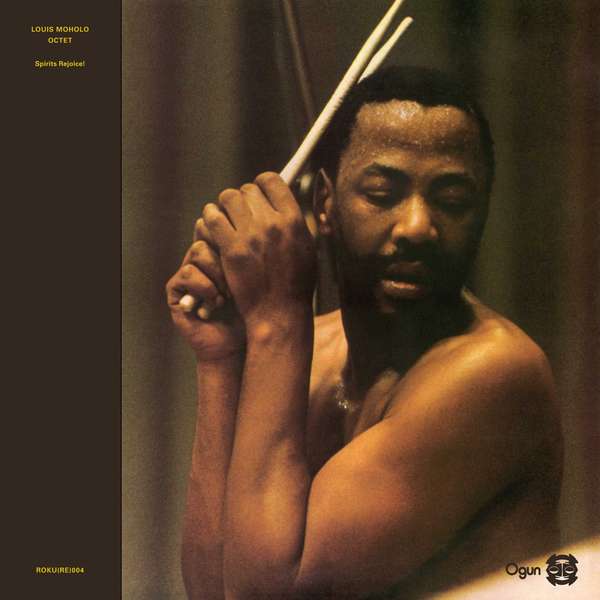
South African drummer Louis Moholo-Moholo (he added an extra ‘Moholo’ at some point subsequent to this recording, in deference to family/cultural traditions) first came to the UK as a member of pioneering Cape Town jazz group The Blue Notes, who collectively relocated to London in 1964. As recounted in a chapter of Joe Boyd’s memoir ‘White Bicycles’ covering the author’s work with the band, The Blue Notes trod a hard road to put it mildly as they tried to establish a place for themselves within the era’s marginal and diffuse British jazz scene, with hard drugs, bad living and, eventually, premature death putting a significant dent in their stride as the members gradually drifted apart and went their separate ways.
Pianist Chris McGregor of course went on to great things with his Brotherhood of Breath, but Moholo-Moholo has likewise kept the fire burning right up to the present day, first hitting back against adversity with his 1978 debut LP as band leader, ‘Spirits Rejoice!’. Reissued late last year on Café Oto’s Otoroku label, the album showcases the impressively massive-sounding eight-piece ensemble the drummer assembled to play the heavily African-influenced compositions he and his fellow countrymen (including bassist Johnny Dyani, featured here) had collectively knocked up, and the sheer, overwhelming greatness of the results is difficult to overstate.
In addition to the aforementioned players, the octet comprises Keith Tippett on piano, Harry Miller doubling up the bass, and a full quartet of brass players including two trombonists (Radu Malfatti & Nick Evans) alongside free improv luminary Evan Parker on sax and gifted stylistic all-rounder Kenny Wheeler on trumpet -- and right from the outset, this thing is just as much of a joyous riot of incendiary sound as you might have hoped.
Opener ‘Khanya Apho’ finds Parker and Wheeler dropping sloshing puddles of searing post-Ayler skronk across a tempestuous rhythmic work-out, as the declamatory, melodic trombone riffs which open the piece are soon submerged in a writhing sea of happy chaos. Probably the album’s highlight, the following ‘You Ain’t Gonna Know Me Cos You Think You Know Me’ (composed by Blue Notes alumnus Mongezi Feza) is considerably mellower, but even more revelatory in its own way, mustering a swaggering, Elephantine swing from the brass players, whose gentle, insistent melodicism and massed, sinuous groove could part the clouds amid a Pacific tsunami and raise a smile from a death row inmate, I daresay. Play it at some more celebratory occasion, such as a street party or carnival, meanwhile and bliss would swiftly be achieved, guaranteed. It’s just such an unrelentingly generous, happy piece of music, its hard-won, monolithic positivity is difficult to put into words.
Subsequent to that, the similarly blue-skied cosmic/modal workout ‘Ithi-gqi’ proves equally sublime, with dizzying depths of interlocking, twinkle-fingered majesty that could have fitted right in on a late ‘60s Pharaoh or Alice joint – just absolutely stunning. Those declamatory brass riffs ring out again meanwhile on side 2’s ‘Amaxesha Osizi’, sounding like the ceremonial entrance music of some long forgotten, jewel-bedecked Nubian monarch, before the composition slides headfirst across eras and continents to become a slinky, hard-bop workout with Parker very much out in front, his playing as lyrical, compassionate and otherly inspired as ever, holding court until Tippett’s piano spins things off in a different direction entirely with some brain-breaking double-speed repetition, before things slow down again for a euphoric burst of collective ecstasy in the piece’s closing minutes. Whoa! - is about the only verdict I can muster.
And finally, accompanied by live (?!) bird song, the closing ‘Wedding Hymn’ reprises the indelible central riff from ‘You Ain’t Gonna Know Me..’ in appropriately solemn, matrimonial fashion, seguing into a beautiful, melancholic solo from Wheeler, gradually expanding into a lengthy, blissed out honeymoon night reverie from the entire ensemble.
There’s so much going on across the course of ‘Spirits Rejoice!’, so many musical, geographic and historical currents overlapping and intersecting, that picking it all apart would prove a formidable task – and a potentially headache-inducing and unnecessary one, I would suggest. For all the big names and notions involved here, this album is absolutely not the kind of disc you need to be some kind of jazz buff to appreciate.
On the contrary, the music herein is just so massively, overwhelmingly enjoyable, so welcoming and universal in its appeal, that it seems like a better idea to quit analysing it altogether, to quit yakking and instead just to drink it all in, exalting in the fact that it exists and is here with us on whatever’s left of planet earth. It’s a language-killing, thought-stopping, gate-opening, soul-fortifyingly amazing record, in the best possible way. It is aptly named, in short.
(Vinyl copies are still available direct from Café Oto at the time of writing.)
Labels: album reviews, comps & reissues, Louis Moholo Octet
Saturday, February 29, 2020

Staying on a European stoner-rock tip, Ryte appear to dwell somewhere in the vicinity of Vienna, and, though there are a few moments on their self-titled LP which find them stretching out into more atmospheric realms as the fog of feedback ebbs and flows between chords, for the most part they’re keeping it simple here. Which is to say, Ryte deal in riffs. Also solos, plenty of solos. But mainly riffs. Sweet riffs, crushing riffs, comfortingly familiar riffs, cool, tricky riffs, searing, melodic riffs - riffs atop riffs, and verily, these are GOOD riffs. And, to some extent, that’s all that needs to be said here really. Ryte’s riffs, meet the ears of rock fans. You guys are gonna get along great, I just know it!
Fifty word reviews just ain’t the way we roll around here however, so let’s dig deeper. Keeping things about 90% instrumental, Ryte open the first of four extended cuts on their LP with a dense swirl of wah n’ delay-blasted, overdubbed guitar tendrils, sounding not unlike the kind of eternal rockist nirvana envisioned by Mike Vest in his more recent projects, before things eventually thicken up into a meatier, low-end groove which sounds quite a lot like Sleep - a comparison which remains in play across much of the subsequent half hour, particularly coming to the fore during the rare moments in which vocals intrude upon proceedings.
As anyone who has ever detuned an E string in an unventilated room will tell you however, sounding quite a lot like Sleep is easier said than done, and Ryte celebrate their overwhelming success in the doing department by overlaying their riffery with further sick, self-indulgent lead shredding. Also, more riffs. Sweet!
‘Raging Mammoth’! ‘Shaking Pyramid’! Yes, these are the kind of things pieces of music like this should be called, and I commend artist Sandra Havik for her valiant attempts to literally illustrate these concepts on the album’s front cover. Side 2’s ‘Monolith’ is dutifully depicted on the back cover meanwhile, whilst the accompanying track mixes things up somewhat, heading in a more trad metal direction, bringing in NWBHM-ish harmonic leads and moving from curious, almost jazzy/modal passages early on toward some positively Maiden-esque adventures in mid-tempo, dragon-slaying guitar heroism. Probably the all-round best cut here, it’s pretty damn immense.
And as for fourth/final cut ‘Invaders’… well, I suppose the mammoth and/or pyramid might be seen to be ‘invading’ in some more general sense, but otherwise, no dice, art-wise. Music-wise, it proves a a bit of an outlier too, following up a few minutes of consummate – though by this point standard issue – riffage with a member of the band with a reedy, somewhat theatrical voice taking the mic to holler about “space invadeeeeers”, followed up by some seriously wacky theremin action. Hmm.
So: pretty much a “what’s not to like?” scenario here, I’m thinking. Totally flawless, psyched-out riff-rock / full-on metal with a slight edge of off kilter weirdness? Yes please! Frankly I’d be heading to leave this spinning for a good few weeks even without the off kilter weirdness, but it’s all to the good. Nothing ground-breaking here perhaps, but utter, self-indulgent fun of the highest order, destined to keep me putting one foot in front of the other for weeks to come.
Labels: album reviews, Ryte
Wednesday, February 26, 2020

Returning to the astral plain of pure musical escapism, Domo hail from the golden city of Alicante. Their name doubles as a Japanese honorific (“domo arigato”, etc), which pleases me, and their debut ‘Domonautas Vol # 1’ LP (on the German Clostridium label) finds them infusing their consummate stoner/space-rock with a heroic dose of pre-‘Dark Side..’ Floyd / early King Crimson styled compositional ambience, which pleases me yet further, fooling me for forty-odd minutes into imagining all is right with the world.
For, as long as the dusty string/brass/choral textures drift past like a twilight frolic through Bosch’s Garden on the opening ‘Oxymoron’, languid bass walkin’ the dog until those pyramid-robbin’, Eastern-tinged riffs crash down at precisely the right moment for an extended interplanetary grind on second cut ‘Astródomo’ … we have no cause to worry.
Though they may initially seem to be lurking somewhere on the same general vacinity as Denmark’s Causa Sui and the El Paraiso label, aesthetically-speaking, Domo achieve a mellower, more approachable sound here, digging deeper into the feel (rather than merely form) of their vintage influences, leaving their music enriched by fading echoes of bucolic, analogue-era psych alongside their sinister metal void-gazin’ and, crucially, exhibiting a greater veneration for the supremacy of The Almighty Groove.
If there’s a lot of prog in the mix, well, rest assured, this is prog in the best possible sense of the world, valuing a sense of collective expression over individual ego-trips from the players (though there are, naturally, plenty of ripping solos to enjoy too), making – to my ears at least – for a supremely generous quartet of semi-side long jams, epic as you like whilst keeping a careful check on the bombast, making sure heads keep nodding all the way to the silver gates of infinity. (The cyclical riff on side 2’s ‘Rituel del Sol’ is particularly immense in this respect.)
Basically, this record sounds like it’s cover art (by Maarten Donders) looks, to the extent that I’d wager your instinctive reaction to the cover will very likely mirror your response to the music within. If you have no space for this in your life, I won’t judge you, but personally, I’m down with it.
(Up close you can even see the brush strokes and the texture of the canvas reproduced on the LP cover, it looks smashing. I wish it was made of that lovely textured card material you sometimes get on old ‘70s albums, but shit, can’t have everything right? Might as well demand to see it adorning the walls of some candle-lit beach house, waves crashing upon the shore outside. It’s a lovely package anyway, and I’m happy merely to own this LP; well worth the eye-watering sum you’ll likely pay to some delivery firm to place one in yr hands.)
Labels: album reviews, Domo
Saturday, February 22, 2020

I realise this may not be big news to those quicker on the uptake than I, but Jaimie Branch is a U.S.-based trumpet player (and latterly, vocalist), and ‘Fly or Die II: Dog Birds of Paradise’ is her second album for the so-flawlessly-hip-it’s-making-me-suspicious International Anthem label. Recorded on stage at London’s Total Refreshment Centre and Café Oto in late 2018 (why was I not there, what an absolute fool), the record is a fairly sombre and stripped back affair in comparison to the kaleidoscopic splendour favoured by some of Branch’s label-mates, finding her accompanied for the most part simply by a core trio of Lester St Louis (cello), Jason Ajemian (string bass) and Chad Taylor (drums).
Though she may also be lacking in Ellingtonian compositional heft, in terms of pure feel, I get a strong Mingus kick from Branch’s work. There’s certainly a lot of dark, empty space between her strident, combative horn crescendos and the churning, knotty low end provided by Ajemian and St Louis, which puts me in mind of the textures on the classic Mingus albums, but more importantly, her songs (and there are indeed some songs here) also seem driven by a similarly heady mixture of joyous exuberance and deep-rooted anger.
Nowhere is this more evident than on the album’s centre-piece and obvious stand-out, ‘Prayer for Amerikkka’, a brooding yet adrenalised lament which finds Branch taking to the vocal mic, linguistic syntax crumbling slightly, as in all the best anger-choked outbursts, as she speaks in no uncertain terms of the “bunch of wide-eyed RACISTS” currently clogging up the pipes of her nation, as disorienting bursts of street chatter (live or over-dubbed?) are threaded through the track’s sparse undergrowth.
The track’s second half meanwhile brings forth a more lyrical verse section, which seems to take us into the POV of a young Central American migrant, crossing the border at dawn. Repeated several times until it becomes almost mantra-like, this short, sketchy narrative becomes increasingly ominous, gradually adding detail and building a gut-wrenching sense of tension, interspersed with coruscating blasts of Branch’s disjointed, mariachi-like horn riffs, and her repeated, urgent message - “this is a warning honey, they’re coming for you..”.
It’s pretty on-the-nose, no question about it, but if this isn’t an appropriate moment for musicians to take a stand and get it all out there, I’d like to know when the hell it will be. THIS is the record I felt myself needing throughout 2019, perhaps since I took in the similarly white-hot frustration of Obnox’s similarly themed ‘Templo Del Sonido’ Back in 2018, though typically, it’s taken me a good, long while to blunder my way toward it.
Branch hits many of the same notes once again on the closing ‘Love Song (for Assholes and Clowns)’ (how’s that for an ersatz Mingus song title, incidentally?), a kind of mutant noir torch song of disgust directed toward the malign and ignorant forces currently feeding the fire of human misery. In between these two spikes of rage however, there’s more to this record’s appeal than mere culture war chest-beating, as the more relaxed and explorative instrumental cuts in-between spread out deep and weird across the wax, still equally infused with the feeling of people grasping to try to pull the best out of the morass of rootless frustration, sensory confusion and eerily deferred physical hardship within which many of us now live, but… in a rather more measured fashion, I suppose.
The ‘Bird Dogs’ moniker and avian artwork is reflected in the trilling waves of vibes, flute and hand percussion which add a touch of psychedelic glimmer to the opening title track, whilst ‘Nuevo Roquero Estereo’ on side # 2 is particularly exceptional - eight plus minutes of sick, skittering hypnogogic groove over which what I assume to be some pretty hairy live electronic processing runs riot, doubling and tripling Branch’s riffs and pushing her signal through a hot mess of distortion and reverb, leaving eerie fog banks of noise cascading through the dark space deep in the mix.
For all its platitudes about universality and communication and realising potential and so on, the best of the new jazz stuff I’ve been getting into recently genuinely seems to function by taking a retooled, arts n’ crafts movement type approach to re-establishing vital human/music connections which have been severed across successive decades. By paring back the cosmic/head-noddin’ drift of her contemporaries however, Jaimie Branch seems to reveal some sharply honed socio-political blades beneath, hitting the scene from the best possible angle. More of this, and soon, please – I think we’re gonna need it.
Labels: album reviews, Jaimie Branch
Tuesday, February 18, 2020

What we’re essentially hearing here, I think, is the sound of two factions moving beyond their respective comfort zones, meeting somewhere in the middle, looking around at the curious landscape of an area which neither of them have really explored before and… I dunno, building a nice treehouse together, I suppose.
So, Louise and Morgan range out beyond (what I assume to be) the more conventional, song-based folk of their own groups, embracing a woozier, more free-form approach, whilst Battalene for her part nixes the PSF-styled noise-rock maximalism of her playing in the aforementioned bands, instead threading her way into the gentler, more delicate fabric favoured by her collaborators. Applying a variety of more intuitive and low-key guitar/effects treatments to the tracks here, she helps bring the underlying psychedelia of the enterprise simmering nicely to the surface, finally breaking out with some tormented, dissonant racket towards the end of the track-list, on what is probably my favourite track here, the mantra-like forest mulch trip-out of ‘Emerald Ash’.
Prior to that however, beautiful heavy tremolo strumming adds shimmering depths to the otherwise fairly trad country-folk of ‘Gathering’, whilst strange, throbbing delay pedal conjurations provide an ominous bed for ‘Squash Vine’s similarly healthy, no nonsense indie-folk take on free-from jamming, allowing it to grow into something rather spectacular across its six minute duration - a winning combo of elements repeated on the record’s slightly more tangible centre-piece, ‘Cherry Tree Carol’, whose mix of earnest, trad-arr vocal recital and more rock inclined backing might perhaps strike a distant chord with fans of Shirley Collins & The Albion Country Band’s revered ‘No Roses’.
Indeed, as is nigh-on inevitable for this kind of acoustic/electric, folk/psych type venture, the trio touch upon some familiar, leaf n’ bramble-strewn ground over the course of these seven cuts, fleetingly sharing shadows with some of my own old faves of yesteryear. A whiff of early Charalambides can definitely be discerned in the more abstract, unglued moments (the ominous, wordless vocalisations of opener ‘Skullcap’ and closer ‘Five’, for instance), although the feel here is thankfully way looser and less buttoned up than the Carters’ 21st century work. Elsewhere, instrumental textures (particularly Louise & Morgan’s harmonium and bowed string work) often touch upon the East-West drone alchemy of Pelt, and the picked opening riff of ‘Two’ even momentarily recalls that of Heron Oblivion’s ‘Beneath Fields’… but we needn’t make a fuss about it.
The crucial thing here in fact is that none of these comparison points really take hold for more than a few seconds at a time, and, despite the somewhat hesitant / open-ended nature of this collaboration, the three players succeed in establishing a compelling identity for themselves across these recordings, with each of the seven tracks achieving a sense of hypnotic intensity and a dark-eyed clarity of purpose often lacking from these kind of neo-hippy jam scene ventures. In fact, the whole damn thing is so flat-out wonderful, showcasing such rich, collective promise, it already has me hoping the participants might consider extending their collaboration into a more permanent, on-going band type arrangement.
Released on a digital-only basis by the New York based Black Dirt Studio label, all proceeds earned from bandcamp sales of this album will go “..to the Amazon Conservation Team, who partners with indigenous people to protect the rainforest and their rights”, which I’m sure we can all agree is admirable. I made sure to accelerate it to the front of the queue of records I wish to write about this month furthermore, simply because this everybody-wins exchange of money for mp3 files will only be available to us punters until March 1st 2020, at which point it will be withdrawn from sale, and a shorter, five track version will be made available free of charge. So, if this stuff sounds remotely like your cup of gently spiked herbal tea, please make sure you get in quick and do the decent thing.
Labels: album reviews, Sarah Louise Sally Anne Morgan & Kryssi B
Monday, November 18, 2019

With the departure of heart n’ soul members Jon Slade and Kay Ishikawa, the dissolution of long-time record label Fortuna Pop and a more general fading away / changing-of-the-guard within the London indie scene which had nurtured them for so long, 2014’s wistful and subdued ‘Paperback Ghosts’ felt like a natural farewell for the bedraggled old beast of a band that is Comet Gain; a dignified wave goodbye as they stride off into a golden, autumnal sunset.
But, it was never quite going to happen that way, was it? Like a long forgotten mate knocking on your door one rainy midnight with a six pack and something on his mind – like that teenage fave LP you gave away to charity, then re-bought years later for £20 because you’re an idiot – Comet Gain are back in action, sounding wilder and more impassioned than they have since, well… since kids now taking their GCSEs were busy being born, let’s put it that way.
The band’s members have, it is safe to assume, been significantly exercised by outrage arising from the circumstances surrounding the U.K.’s decision to withdraw from the European Union (I refuse to humour this kick to the head of civilisation with a six letter contraction that makes it sound like a fucking breakfast cereal) – and who in heaven’s name can blame them?
Being hearty, good-natured folk, Comet Gain are not exactly leaving us in any doubt as to where they stand on the current sorry state of affairs, as opening track ‘We’re All Fucking Morons’ makes abundantly clear. Herein, vocalist Rachel Evans pleads with her hypothetical opponents; “I just want to understand you / before I go to war with you”. The hectoring, enervated punk rock stomp which follows suggests that, like so many of us, she did not receive a satisfactory response to her entreaty.
Second track, ‘The Girl with the Melted Mind and the Fear of the Open Door’ is classic Comet Gain, a surging rush of knotty guitar n’ organ textures, breaking against the wall of Woodie Taylor’s ever-steady drumming, its flowery lyrical conjurations seemingly addressing mental illness, social anxiety, drug freakout or some combination thereof. It could fit in nicely next to career highlights like ‘Why I Try To Look So Bad’ or ‘The Ballad of Frankie Machine’. Man, this new burst of anger is really paying off.
Next up though is the real reason you need to listen to this record, and why the idea of a revised Comet Gain line-up fighting their way through the tail end of 2019 suddenly seems like a good idea. Over five and a half seething minutes, the unpromisingly titled ‘Bad Nite at the Mustache’ finds David Feck/Christian’s poetical alter-ego Charlie Damage unburdening his splenetic soul, and it’s a beautiful, terrible, horribly necessary thing to behold.
It takes some guts in the present historical moment for a middle-aged rock band to evoke “another burning tower block / filled with screaming ghosts” without sounding crass, but this track has the hackle-raising, desperate power to pull it off, a freezing rain-soaked dash across some poverty-blighted street almost visible as David/Charlie sneers that, “life is always cheap, always led by the creeps,” the rebel lifer heart beneath his suburban dad exterior rising to the surface as he curses “the tired, dumb fuckers”, a shriek of needle-peaking feedback rise behind him before that shaky, over-driven jangle of yore rises like a practice room phoenix for the chorus, calling upon the abused nation – or the whole abused world, perhaps? – to “cauterise the wounds / with something like fire”.
It’s stunning, frankly – not just a full force reminder of why bands with the kind of wounded, ineffable spirit that powers Comet Gain remain worth persisting with through years of botched gigs and patchy albums, just to catch that moment when the stars align, but also as one of the most devastatingly direct artistic responses to the sickening social malaise we are all guilty of contributing to I’ve heard in this blighted year.
(I realise this probably wasn’t the prescription he had in mind, but in view of the date I’m posting this, I’ll simply note that when you colour in a picture of some fire, you do so with red and yellow combined. JUST SAYIN’.)
Whilst Charlie Damage may insist that “the past wants to make a memory out of the future” though, Senor Feck is certainly not above submerging himself in that past for a bit of comforting wallow, once again reaching way beyond his own lived memories for ‘The Society of Inner Nothing’, a solid jangler which appears to salute the “lavender boys and fireworks girls”, “searching for Horus and Pan” under the auspices of the none-more-rose-tinted ‘60s counter-culture, as well as perpetuating his curious lyrical fixation with Rosicrusianism (perhaps a PKD reference in this instance? – not sure).
Slightly closer to home, ‘The Godfrey Brothers’ is another album highlight, a wonderful, expansive track, very much in the spirit of the ‘Paperback Ghosts’ material. The album’s press release straight-forwardly states that this number is “about the Godfrey brothers”, but this proves a sneaky bit of phrasing, given that the only thing which pops up when you plonk that into your nearest non-Google search engine is the blokes behind late ‘90s chill-out titans Morcheeba.
Even after two whole decades ploughing this particular furrow, it took me a good few minutes of brain-think to recognise that the song is actually a tribute to tragically short-lived siblings Nikki Sudden and Epic Soundtracks, founders of Swell Maps, wgo are both given first person voice here, the latter finding succour in his West Hampstead flat with “500 Beach Boys bootlegs”, the former surrounding himself with “scented scarves and imaginary girls”. Key line: “they all thought we were strange / working upstairs at the Music and Tape Exchange”.
There is a real streak of pain running through this song however, undercutting the band’s usual nostalgic drift; the creeping realisation perhaps that the dark shadow of mortality has already started to fall, not only across the immortal scraggle-haired genii to whom the song is dedicated, but the whole warped generation who were making counter-cultural hay when David and co were young and dumb.
Initially, I wished the same verisimilitude could be located within side #2’s ‘Mid 8-Ts’, a pre-fab indie disco romp through the C-86 glory days of “jumper with holes / playing our roles”. Reminiscent of the ‘City Fallen Leaves’ era, it has the potential to feel like pretty weak tea for those of who don’t share these memories first hand, but the admission that “your heart plays tricks on you / forgets about the shit on your Beatle boots” puts a rather different spin on things, and, in view of this album’s angrier, more uncertain meditations on time, nationality and belonging, there’s a pretty ominous undertow to the chorus’s repeated declaration that “you belong here”, and that “you might as well go where you belong”. That, presumably, being the past, or some aging scenester simulacrum thereof, at the very least.
A word is necessary meanwhile about this album’s production, which, surprisingly, must be the messiest, most quote-unquote “lo-fi” set of recordings the band have released since the heady days of ‘Realistes’ and ‘Tigertown Pictures’, in spite of the presence of consummate pros Ben Phillipson (Eighteenth Day of May) and James Hornsey (The Clientele) in the current line-up.
Were I to take the role of a whinging contrarian, I could make the argument that the urgency of those earlier albums resulted from the fact they were recorded in a time and place - pre-pro-tools, pre-internet – in which the band simply lacked access to a proper studio and someone with the necessary brains to push the buttons in it, and that their hair-raising magic resulted to some extent from the group’s struggle to transcend their limited means, their inspired material and enervated performances punching through the murky mix as if it were a wet paper bag.
Such a ‘feel’ is difficult to recreate however, twenty years down the line, in a room where all the drum mics have clearly been set up properly and the clean-toned guitars are allowed to jangle just so when required to do so on the quieter songs. After all, when it comes to stuff like this, you can never go back, and, here in 2019, the decision to include bulbous, clipping bass frequencies on ‘Victor Jara Finally Found’ and muffed/submerged vocal takes elsewhere simply seems weird and lazy, rather than feeling like unavoidable collateral damage incurred in the midst of a wild, spur-of-the-moment taping session.
Returning the mic to the part of me which is not a whinging contrarian however (hi, fans), I can’t help but observe that the rawer, looser, noisier performances captured on ‘Fireraisers Forever!’ – presumably laid down with a bare minimum of either rehearsal or over-dubs, prioritising ‘feel’ over tuning or fidelity - are a real breath of fresh air after the finicky professionalism and try-hard, garage-rock pastiche of recent years; an honest and raucous reflection of band’s essential essence which propels the anger and desperation of the album’s best material safely over the finish line.
Reverting to more tired Pitchfork-isms meanwhile, I’m also duty-bound to report that ‘Fireraisers Forever!’ is shamelessly front-loaded… but perhaps in the end that’s not such a bad thing? Whereas the album comes out swinging with the single best side of music the band have recorded since David’s return from exile in the late ‘00s, the material on the flip fails to maintain this intensity, soon veering off in some weird, meandering directions which are at best, uh, interesting..? (the organ-dominated rebel fashion exegesis of ‘Werewolf Jacket’), and at worst pretty hard work (the on-the-nose “true confessions of a fuck up” litany of ‘Life On Your Knees’).
Pointedly titled closer ‘I Can’t Live Here Anymore’ likewise doesn’t quite “come off” in terms of conventional song-writing, but you know what? It really doesn’t need to. Seemingly a far more personal take on the damage inflicted on our narrator’s family life by the world’s recent turn to shit, there is no way I could look this band in the eye as David sings “and if there’s no tomorrow / I’ll be right here, holding on to you”, and tell them that this song is anything other than exactly what it needs to be, especially once a small child – David’s kid, perhaps? – enters the mix, nervously singing along on the last few choruses. Not a dry eye in the house, I’m telling you, and no dry tinder either post-Dec 12th, more than likely.
Comet Gain have made a few damn-near-perfect records in their time, and this certainly isn’t one of them – but again, do we really need it to be? Certainly no more so than we ever needed The Mekons or Swell Maps or Alex Chilton to release LPs which played front-to-back satisfactorily without getting lost or making a mess.
Now more than ever, it’s the continuation of the spirt which counts, more than watching the clock, monitoring the meters, gauging the melodicism or counting the verses, and in this sense, Comet Gain’s unexpected resurgence is scarcely half a shade less than a fucking grand achievement – both a painfully necessary reclamation of our current moment reflected through a sprawling, kaleidoscopic past, and a potent source of fuel for some way-fucking-worse moments yet to come.
Buy a download via bandcamp, buy on vinyl direct from Tapete, or listen in full via youtube.
Labels: album reviews, Comet Gain
Wednesday, November 13, 2019

Obsessive Velvet Underground fans may recall ‘The Legendary Guitar Amp Tapes’ – an extraordinarily ragged live bootleg distinguished by the fact that the accidental genius responsible for taping a series of Boston concerts placed their recording device on top of the guitar amps, resulting in hours and hours of churning Sterl n’ Lou strummage, hanging disembodied in space, almost entirely disconnected from the soothing context usually provided by songs, vocals, drums, and Doug Yule’s smiling face.
The results proved a bit too much even for me to be perfectly honest, but the person or persons behind mysterious Parisian outfit Hôpital De La Conception apparently deemed these absurd recordings the ne plus ultra of rock n’ roll’s grand mission, subsequently recording and releasing ‘The Electric Rockin' Chair’, in which two lonely electric guitars hold down the musical equivalent of a dead-eyed stare for just over half an hour without blinking.
Evoking an enervated, teeth-grinding, urban-subway-sound, the clean-toned rhythm guitar clings maniacally to a single chord – pure white heat, with ABSOLUTELY NO syncopation, slack or string-bends allowed in the building (Hôpital De La Conception SPITS upon your stupid ‘blues’).
Lead line over the top meanwhile gets busy with some hideously malformed practice amp wah-wah pedal shit, later reining it in in favour of finger-slicing, overdriven high end explorations, hitting that same peak of ‘Run Run Run’-at-the-Gymnasium nirvana again and again and again, then circling back ‘round for more. Occasionally, a man mutters slurred, potentially saucy, off-mic exclamations in French. Sounds like he’s enjoying himself.
From whence did this music emerge? From the austere bedroom of some finely tailored, smack-smoking gallic super-snob who wears shades 24/7 and will insist to the point of death that this is THE ONLY TRUE, LEGITIMATE ROCK N’ ROLL MUSIC? From a couple of bored music students casually marking out an intriguing historical dead-end? From some former garage band dude gone wa-ay off-piste in pursuit of room-clearing devilry? Who knows. Beyond the clues provided by this tape’s intriguing, headless cover shot, perhaps we will never know.
For most of the human race, this music will prove about as appealing as dental torture, but for those of us who’ve already had our palettes thoroughly scoured by the merciless wire-wool of The V.U., Rallizes, Black Time and Jim Shepard, there’s a fine, evil draught to enjoy here, worth drinking to the dregs. I’m not really sure why, but then, I’m not sure why I stuck my finger in the socket of that light-fitting when I was eight years old either, and a few decades later here we all are.
Listen & download via Opaque Dynamo bandcamp.
2019 vinyl pressing on Cardinal Fuzz / Feeding Tube already LONG SOLD OUT by this point, but hey, it exists.
Labels: album reviews, France, Hôpital De La Conception, tapes
Friday, November 08, 2019

Though I was too slow on the draw to pick up a vinyl copy for an affordable price, I’ve been listening to my mp3 version of Joshua Abrams & The Natural Information Society’s ‘Mandatory Reality’ album nigh-on religiously in recent months - the 25 minute opening cut ‘In Memory’s Prism’ in particular. And yet… I’m pretty much at a loss when it comes to trying to find something to say about this wonderfully calm and organic hybrid of minimalist composin’ methodology and ethno / jazz instrumentation.
As others with more authority to write about such matters than I have pointed out, the most relevant point of comparison here may be the “fourth world” approach to music pioneered by Don Cherry during the ‘70s, as captured on equally brilliant and intangible records like ‘75’s ‘Brown Rice’ (also reissued this year and well worth the investment, incidentally). Potentially dozens of instruments and textures drift in and out of these tracks across their mammoth duration, strings and keys droning away as they are apt to do, whilst unnervingly dissonant washes of brass and bowed cymbals crashing through the mix like spectral, horn-blaring New York cabs, yet for the most part, proceedings here feel entirely relaxed, eminently measured - entirely under control.
Central to this music’s appeal is the fact that, rather than drifting off into abstraction, the tracks remain anchored around simple, almost child-like melodies – endlessly appealing harmonic phrases picked out on some string bass and glockenspiel-type things (practically none of the instruments my ears tell me are present on this record are actually listed on the credits), lending the music a feeling of warmth and accessibility that any open-eared, human listener should be able to appreciate.
If this can indeed be deemed a ‘drone’ record (and the proposition is questionable, though ‘In Memory’s Prism’ has tended to get played in the time and place I normally reserve for drone records), then it’s certainly not a “cold depths of interstellar space” type proposition – more of a “come on in, make yourself at home, would you like a cup of tea?” kind of deal, like walking into a stranger’s living room for the first time and immediately feeling so much at home that you feel you could spend your entire life there. There is a sense of no-strings-attached generosity and comfort within this music that temporarily makes one’s surroundings feel full of hope and new possibilities whilst it plays. And this, incidentally, is quite possibly the most hippie-ish paragraph I have ever written. You see what you’ve done to me, Mr Abrams?
Bandcamp link.
Labels: album reviews, Joshua Abrams & Natural Information Society
Friday, October 11, 2019

Firmly established by this point as one of the best live bands in the UK (or if they’re not, they damn well should be), the release of a new record from Grey Hairs is always a happy event around these parts, and, just like second LP ‘Serious Business’ from a few years back, third proper full length ‘Health & Social Care’ is both a huge leap forward for their recorded sound and clearly their best one yet, suggesting a happy future for the Hairs as one of those groups who just get better and better, doggedly honing their craft as the years go by. (As I get older, I like those bands the best.)
Opener ‘Hydropona’ is an absolute f-ing kaiju monster of a track, swinging on a slo-mo wrecking ball groove that any contemporary doom band would kill for. ‘Piss Transgressor’* is a more concentrated blast of dissonant, unholy multi-tracked chaos, Chris Summerlin’s guitar-work as always delivering consummate, imaginative brutalism, and third track ‘Ghost In Your Own Life’ finds them opening up into a weirdly menacing kind of wavo pop, speaking distantly perhaps to the band’s oft-mentioned veneration of the B-52s…? I mean, it’s always been lurking in there somewhere, but they’re pushing it to the fore here, and it… works?
Compositionally, the band apply themselves here to conveying the challenges of working in the boiler-rooms of the increasingly crippled NHS whilst keeping body and soul together on those bleak winter trudges between work, pub, practice space and home. I love Nottingham dearly, but, spend a few hours there, wondering beyond the city centre, and you’ll get the idea. More than ever, frontman James – tightening up his Proper Rock Vocalist delivery here without losing any of his compelling idiosyncrasy - hedges the precise verbiage of his lines with impressionistic obscurity, whilst simultaneously ensuring that the intended feel is communicated loud and clear.
Just take ‘Tory Nurse’ for example, which defuses the easy polemic promise of its button-pushing title with hazy evocations of “slowing switching off”, “the sun keeps spinning” etc – yet still somehow leaves us in no fucking doubt as to the content of the spiked ball of mixed up emotion the band wish to lob in the direction of said nurse. There’s a gnarled kind of alchemy here, an avoidance of the obvious fused with a desperate howling of the totally-fucking-obvious, which has informed the best electric guitar n’ drums type music ever since Chuck Berry was first put in handcuffs.
At the risk of repeating myself from past reviews, Grey Hairs make proper modern rock music, reclaiming that horribly loaded phrase from a place of the map which finds it bracketed between moustache-twiddling sub-genre re-enactment societies and shit that sounds like The Foo Fighters. In doing so, they stare down cold the expected bandwagon of influences, they address the world in which we live with honesty and insight, they conduct their band business with integrity, and, they rock, in a manner both profound and disconcertingly literal.
If you find yourself sick of a life full of dodgy cabling and dented speaker cabs, crowded dark rooms full of pints and germs, please listen to ‘Health & Social Care’, and remind yourself what the point is.
Grey Hairs bandcamp is here.
Buy this record directly from Gringo here.
---
* This song’s grindcore-esque title was eloquently elaborated upon in the text of a now-difficult-to-link-to press release, as follows: “..seeing yourself in failing men. Standing next to each other in pub toilets dispelling your body waste together. It's a symbiotic moment that is rarely comfortable. It's about the fear of becoming the other. The lines get blurred as we remember our younger selves and times when pop culture was less prescient and that the streams should never cross. The streams have crossed and what now?”
Labels: album reviews, Grey Hairs

Archives
- 05/01/2004 - 06/01/2004
- 06/01/2004 - 07/01/2004
- 07/01/2004 - 08/01/2004
- 08/01/2004 - 09/01/2004
- 09/01/2004 - 10/01/2004
- 10/01/2004 - 11/01/2004
- 11/01/2004 - 12/01/2004
- 12/01/2004 - 01/01/2005
- 01/01/2005 - 02/01/2005
- 02/01/2005 - 03/01/2005
- 03/01/2005 - 04/01/2005
- 04/01/2005 - 05/01/2005
- 05/01/2005 - 06/01/2005
- 06/01/2005 - 07/01/2005
- 07/01/2005 - 08/01/2005
- 08/01/2005 - 09/01/2005
- 09/01/2005 - 10/01/2005
- 10/01/2005 - 11/01/2005
- 11/01/2005 - 12/01/2005
- 12/01/2005 - 01/01/2006
- 01/01/2006 - 02/01/2006
- 02/01/2006 - 03/01/2006
- 03/01/2006 - 04/01/2006
- 04/01/2006 - 05/01/2006
- 05/01/2006 - 06/01/2006
- 06/01/2006 - 07/01/2006
- 07/01/2006 - 08/01/2006
- 08/01/2006 - 09/01/2006
- 09/01/2006 - 10/01/2006
- 10/01/2006 - 11/01/2006
- 11/01/2006 - 12/01/2006
- 12/01/2006 - 01/01/2007
- 01/01/2007 - 02/01/2007
- 02/01/2007 - 03/01/2007
- 03/01/2007 - 04/01/2007
- 04/01/2007 - 05/01/2007
- 05/01/2007 - 06/01/2007
- 06/01/2007 - 07/01/2007
- 07/01/2007 - 08/01/2007
- 08/01/2007 - 09/01/2007
- 09/01/2007 - 10/01/2007
- 10/01/2007 - 11/01/2007
- 11/01/2007 - 12/01/2007
- 12/01/2007 - 01/01/2008
- 01/01/2008 - 02/01/2008
- 02/01/2008 - 03/01/2008
- 03/01/2008 - 04/01/2008
- 04/01/2008 - 05/01/2008
- 05/01/2008 - 06/01/2008
- 06/01/2008 - 07/01/2008
- 07/01/2008 - 08/01/2008
- 08/01/2008 - 09/01/2008
- 09/01/2008 - 10/01/2008
- 10/01/2008 - 11/01/2008
- 11/01/2008 - 12/01/2008
- 12/01/2008 - 01/01/2009
- 01/01/2009 - 02/01/2009
- 02/01/2009 - 03/01/2009
- 03/01/2009 - 04/01/2009
- 04/01/2009 - 05/01/2009
- 05/01/2009 - 06/01/2009
- 06/01/2009 - 07/01/2009
- 07/01/2009 - 08/01/2009
- 08/01/2009 - 09/01/2009
- 09/01/2009 - 10/01/2009
- 10/01/2009 - 11/01/2009
- 11/01/2009 - 12/01/2009
- 12/01/2009 - 01/01/2010
- 01/01/2010 - 02/01/2010
- 02/01/2010 - 03/01/2010
- 03/01/2010 - 04/01/2010
- 04/01/2010 - 05/01/2010
- 05/01/2010 - 06/01/2010
- 06/01/2010 - 07/01/2010
- 07/01/2010 - 08/01/2010
- 08/01/2010 - 09/01/2010
- 09/01/2010 - 10/01/2010
- 10/01/2010 - 11/01/2010
- 11/01/2010 - 12/01/2010
- 12/01/2010 - 01/01/2011
- 01/01/2011 - 02/01/2011
- 02/01/2011 - 03/01/2011
- 03/01/2011 - 04/01/2011
- 04/01/2011 - 05/01/2011
- 05/01/2011 - 06/01/2011
- 06/01/2011 - 07/01/2011
- 07/01/2011 - 08/01/2011
- 08/01/2011 - 09/01/2011
- 09/01/2011 - 10/01/2011
- 10/01/2011 - 11/01/2011
- 11/01/2011 - 12/01/2011
- 12/01/2011 - 01/01/2012
- 01/01/2012 - 02/01/2012
- 02/01/2012 - 03/01/2012
- 03/01/2012 - 04/01/2012
- 04/01/2012 - 05/01/2012
- 05/01/2012 - 06/01/2012
- 06/01/2012 - 07/01/2012
- 07/01/2012 - 08/01/2012
- 08/01/2012 - 09/01/2012
- 09/01/2012 - 10/01/2012
- 10/01/2012 - 11/01/2012
- 11/01/2012 - 12/01/2012
- 12/01/2012 - 01/01/2013
- 01/01/2013 - 02/01/2013
- 02/01/2013 - 03/01/2013
- 03/01/2013 - 04/01/2013
- 04/01/2013 - 05/01/2013
- 05/01/2013 - 06/01/2013
- 06/01/2013 - 07/01/2013
- 09/01/2013 - 10/01/2013
- 10/01/2013 - 11/01/2013
- 11/01/2013 - 12/01/2013
- 12/01/2013 - 01/01/2014
- 01/01/2014 - 02/01/2014
- 02/01/2014 - 03/01/2014
- 03/01/2014 - 04/01/2014
- 04/01/2014 - 05/01/2014
- 05/01/2014 - 06/01/2014
- 06/01/2014 - 07/01/2014
- 07/01/2014 - 08/01/2014
- 08/01/2014 - 09/01/2014
- 09/01/2014 - 10/01/2014
- 10/01/2014 - 11/01/2014
- 11/01/2014 - 12/01/2014
- 12/01/2014 - 01/01/2015
- 01/01/2015 - 02/01/2015
- 02/01/2015 - 03/01/2015
- 04/01/2015 - 05/01/2015
- 05/01/2015 - 06/01/2015
- 06/01/2015 - 07/01/2015
- 07/01/2015 - 08/01/2015
- 08/01/2015 - 09/01/2015
- 09/01/2015 - 10/01/2015
- 10/01/2015 - 11/01/2015
- 11/01/2015 - 12/01/2015
- 12/01/2015 - 01/01/2016
- 01/01/2016 - 02/01/2016
- 04/01/2016 - 05/01/2016
- 06/01/2016 - 07/01/2016
- 07/01/2016 - 08/01/2016
- 10/01/2016 - 11/01/2016
- 11/01/2016 - 12/01/2016
- 12/01/2016 - 01/01/2017
- 01/01/2017 - 02/01/2017
- 02/01/2017 - 03/01/2017
- 03/01/2017 - 04/01/2017
- 04/01/2017 - 05/01/2017
- 05/01/2017 - 06/01/2017
- 09/01/2017 - 10/01/2017
- 11/01/2017 - 12/01/2017
- 12/01/2017 - 01/01/2018
- 01/01/2018 - 02/01/2018
- 02/01/2018 - 03/01/2018
- 03/01/2018 - 04/01/2018
- 04/01/2018 - 05/01/2018
- 05/01/2018 - 06/01/2018
- 07/01/2018 - 08/01/2018
- 08/01/2018 - 09/01/2018
- 09/01/2018 - 10/01/2018
- 10/01/2018 - 11/01/2018
- 11/01/2018 - 12/01/2018
- 12/01/2018 - 01/01/2019
- 01/01/2019 - 02/01/2019
- 02/01/2019 - 03/01/2019
- 03/01/2019 - 04/01/2019
- 04/01/2019 - 05/01/2019
- 05/01/2019 - 06/01/2019
- 06/01/2019 - 07/01/2019
- 07/01/2019 - 08/01/2019
- 08/01/2019 - 09/01/2019
- 09/01/2019 - 10/01/2019
- 10/01/2019 - 11/01/2019
- 11/01/2019 - 12/01/2019
- 12/01/2019 - 01/01/2020
- 01/01/2020 - 02/01/2020
- 02/01/2020 - 03/01/2020
- 03/01/2020 - 04/01/2020
- 04/01/2020 - 05/01/2020
- 05/01/2020 - 06/01/2020
- 06/01/2020 - 07/01/2020
- 07/01/2020 - 08/01/2020
- 09/01/2020 - 10/01/2020
- 10/01/2020 - 11/01/2020
- 11/01/2020 - 12/01/2020
- 12/01/2020 - 01/01/2021
- 01/01/2021 - 02/01/2021
- 02/01/2021 - 03/01/2021
- 03/01/2021 - 04/01/2021
- 08/01/2021 - 09/01/2021
- 10/01/2021 - 11/01/2021
- 04/01/2026 - 05/01/2026